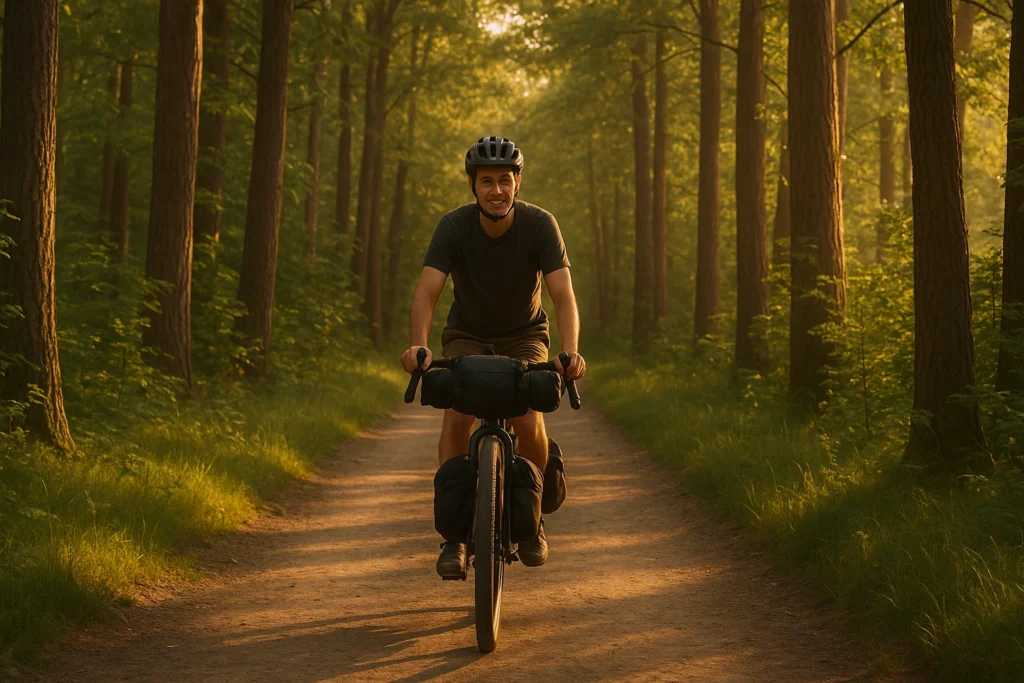
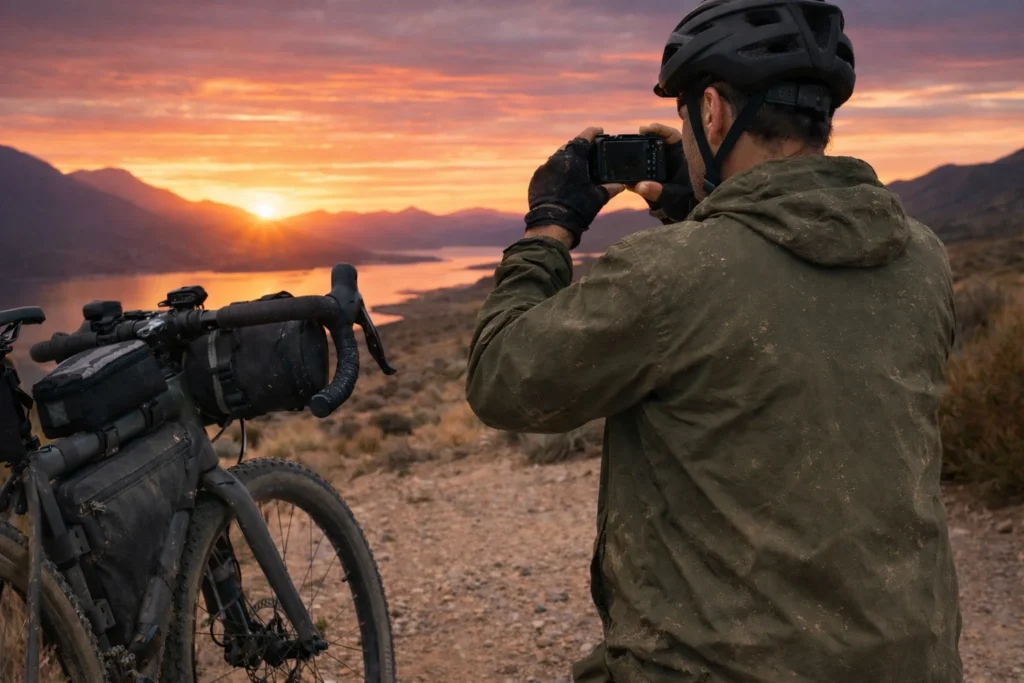
It’s the night before your first overnight. Your tabs are open, your cart is half full, and you’re wondering what’s actually “necessary” vs. what’s just shiny. This guide is my practical take on bike touring gear for beginners—what to buy first, what to skip (for now), and how to build an affordable beginner bike touring setup that works for traditional touring and light bikepacking. If you already own something that works, keep it—your first trip is about learning what you actually need.
Quick note: I use “bike touring” broadly here (paved touring + light bikepacking) because the starter essentials overlap. When a choice does change (usually bags/handling), I’ll flag it so you don’t buy the wrong thing.
If you want the lightest, simplest starter-kit approach—basically bikepacking minus the gear—start here: bikepacking gear (my starter setups guide).
This page contains affiliate links and may include sponsored content. As an Amazon Associate, I earn from qualifying purchases at no extra cost to you. Amazon links are labeled #ad; other affiliate links may be marked as “affiliate link,” “Sponsored,” or “(paid link).” Learn more.
Table of Contents
- Starter kit: budget touring gear first
- Under-$500 path (quick overview)
- Tailoring Budget Gear to Your Trip
- Touring Gear Checklist (2-Minute Planner)
- Best Budget Bikepacking Bags (That Also Work for Touring)
- Why Budget Touring Gear Matters for Beginners
- Sleep System Picks That Don’t Break the Bank
- Budget Tools and Repair
- Cooking with Budget Gear
- Clothing & Personal Essentials on the Cheap
- Works for Bikepacking Too (Small Differences)
- What NOT to Buy Yet
- Upgrade Path After Your First Trip
- Frequently Asked Questions
- Final Thoughts
Bike Touring Gear for Beginners: Starter Kit
If you only read one part of this article, make it this section. You want a kit that’s shakedown-ready—not a perfect, expensive “someday” setup.
- Start with the trip-stoppers: carry system + flat-fix + rain basics.
- Think in tiers, not price tags: “Value” = cheapest that still works; “Mid” = nicer comfort/durability.
- Budget trade-offs are usually bulk/weight: not “unsafe,” just less sleek.
Minimum viable kit (most beginners): a carry system, a reliable flat-fix setup, and a rain layer. Add shelter/sleep if you’re camping.
Before you scroll the table: this is a menu of solid starter options by category—not a “buy everything” list. If you want the under-$500 path, follow Under-$500 path and ignore the “nice-to-haves” until after your first overnight.
Premium = “buy-once” upgrades: if you have extra budget, spend it where it prevents the most common re-buy regret (sleep comfort + packed size).
Starter picks that usually work: weights and specs vary by size/version, but these are solid beginner defaults.
| Item | Approx. Weight | Tier | Why I chose it (trade-off) | Where to look |
|---|---|---|---|---|
| Carry system: ROCKBROS Waterproof Panniers (30L) | Varies | Value | Stable + roomy + waterproof for the money (needs a rack; wider profile than bikepacking bags). | View on Amazon |
| Carry system: Blackburn Outpost Frame Bag | ~280 g (9.9 oz) (listed) | Mid | Keeps weight centered + easy access (can reduce bottle-cage space; fit depends on your frame triangle). | View on Amazon |
| Carry system: Topeak BackLoader Saddle Bag (10L) | ~445 g (15.7 oz) (listed) | Mid | Good rack-free option for bulky/light gear (can sway if overpacked; packing technique matters). | View on Amazon |
| Shelter: ALPS Mountaineering Lynx 1 | ~1,860 g (4.1 lb) (listed) | Value | Reliable solo tent value (heavier/bulkier than true UL tents, but solid for the price). | View on Amazon |
| Sleeping bag: REI Co-op Trailmade 20 | Varies | Value | Beginner-proof warmth for the money (synthetic is more forgiving in damp; bulkier/heavier than down). | View at REI |
| Sleeping bag (upgrade pick): Big Agnes Sidewinder SL (35°) | Varies | Premium | Upgrade if bag bulk or sleep comfort is your #1 annoyance: packs smaller + more comfortable “real sleep” (especially side sleepers). | View on Amazon |
| Sleeping pad: Therm-a-Rest Z Lite Sol | ~283 g (10.0 oz) (listed) | Value | Simple + nearly indestructible (bulky; less plush than inflatable pads). | View on Amazon |
| Sleeping pad (premium upgrade): Therm-a-Rest NeoAir XLite NXT | ~370 g (13.0 oz) (listed) | Premium | Packs tiny + warmer for 3-season use (pricey; some find it a bit “crinkly”). | View on Amazon |
| Repair: Crankbrothers M19 Multi-Tool | ~175 g (6.2 oz) (listed) | Mid | More “trip-saving” coverage because it includes a chain tool (heavier than tiny multi-tools). | View on Amazon |
| Repair (tubes): Park Tool TL-1.2 Tire Levers | Negligible | Value | Gets the tire off reliably so you can actually fix the flat (super-tight tires can still take patience). | View on Amazon |
| Repair (tubes): Park Tool GP-2 Patch Kit | Negligible | Value | Fast, beginner-friendly tube patches (less reliable if the tube is wet/dirty/cold; longer tours may prefer glue patches). | View on Amazon |
| Repair (tubeless): PRO Bike Tool Tubeless Plug Kit | Negligible | Value | For tubeless tires when sealant can’t handle the hole (not for tube punctures). | View on Amazon |
| Pump (compact): PRO Bike Tool Mini Pump | ~115 g (4.1 oz) (listed) | Mid | Compact + lightweight (more pumping effort than larger pumps). | View on Amazon |
| Cooking: MSR PocketRocket 2 | ~74 g (2.6 oz) (listed) | Mid | Classic first stove: tiny + fast boil (not great in wind; upgrade later if you ride cold/windy a lot). | View on Amazon |
| Cook pot: TOAKS Titanium 750ml Pot (Bail Handle) | ~110 g (3.9 oz) (listed) | Mid | Best all-around solo pot size (enough room to cook without spilling; still packs small). | View on Amazon |
| Lighting (headlamp): Nitecore NU20 Classic | ~38 g (1.3 oz) (listed) | Value | Huge “camp + emergency” value for almost no weight (rechargeable, so remember a charging plan). | View on Amazon |
| Safety (bike lights): USB-Rechargeable Front/Rear Light Set | ~77 g (2.7 oz) (listed) | Value | Easy to mount + remove + recharge (confirm mount security + real-world brightness for your riding). | View on Amazon |
| Clothing: Frogg Toggs Ultra-Lite2 | Varies | Value | Cheap rain insurance that works (bulkier fit; durability depends on abuse). | View on Amazon |
| Safety (compact): Adventure Medical Kits Ultralight/Watertight .3 | Varies | Value | Small baseline first-aid for short trips (still add personal meds + must-haves). | View on Amazon |
I get it—right after that table, most beginners are still in “keep it cheap” mode. The value picks above will absolutely get you out the door. But if you’re planning more than 1–2 trips a year, there’s one place where spending a bit more early often saves a re-buy later: your sleeping pad (packed size + cold-ground comfort).
If I could only splurge on one thing early: Therm-a-Rest NeoAir XLite NXT
This is the “buy-once” upgrade that usually changes day-two energy. If you only do 1 trip a year, the Z Lite is totally fine—upgrade when bulk/cold becomes your #1 annoyance.
Quick rule of thumb (so you don’t overbuy):
- Absolute minimum for almost everyone: carry system + repair kit + pump + rain layer.
- If you’re camping: add shelter + sleep system (bag + pad).
- Everything else: cooking, extra first-aid, and comfort upgrades can wait until after your first overnight or two.
Pro tip: Do a shakedown ride before your real tripRide 10–20 km fully loaded, practice fixing a flat at home, and tweak your packing until nothing rubs, rattles, or sways. This one step turns “gear on paper” into “gear I trust”—it’s worth every minute.
Once you’ve picked your core items, set a rough “cap” for each category (bags, sleep, shelter). That way, when you spot a sale or a clean used deal, you’ll know instantly if it’s worth grabbing. Most importantly—schedule that shakedown ride soon. It’s the fastest way to turn this list into confidence on the road.
Under-$500 Path (Quick Overview)
This is the simplest “get outside” path that usually lands under $500 if you shop value picks + sales/used. Prices vary a lot, so think in caps instead of exact totals.
- Start (almost everyone): carry system + tire levers + GP-2 patch kit + mini pump + Frogg Toggs.
- If camping: add ALPS Lynx 1 + REI Trailmade 20 + Z Lite Sol (bulky, but reliable).
- If you hate bulk later: swap Z Lite → NeoAir XLite NXT (packs dramatically smaller).
The goal is your first overnight, not the perfect forever kit. Upgrade with evidence after you’ve ridden it.
Tailoring Budget Gear to Your Trip
The fastest way to waste money is buying gear for the wrong tour. If you’ve ever bought something “just in case” and then never used it… yeah, touring can do that.
- Hotel / credit-card touring (mostly paved): prioritize comfort and simplicity. You can skip the full camp sleep system and cooking gear.
- Mixed touring (some camping): you’ll want shelter + sleep, but you can go simple and upgrade later.
- Rougher bikepacking routes: prioritize a narrower profile (frame + saddle + handlebar) and keep loads lighter.
Beginner rule: pick your carry system first (panniers vs. rack-free bags). That single choice decides your packing, handling, and what “fits.”
Do this now: Write down your route surface (mostly paved vs. mixed vs. rough). If it’s rough, commit to a narrower bag setup before you buy anything else.
Touring Gear Checklist (2-Minute Planner)
This quick planner turns the article into a simple action plan. Pick your trip style, check what you already have, and it’ll generate a prioritized “buy next” list (with links to the right sections). On mobile, it’s designed to tap-through cleanly—no tiny targets.
Check what you already have:
Tip: your selections are saved on this device so you can come back later.
Best Budget Bikepacking Bags (That Also Work for Touring)
If there’s one purchase that changes how confident you feel on day one, it’s your carry system. A wobbling load can make you feel “bad at touring” when it’s really just bad packing. If you’re trying to decide between panniers and bags, this section will help.
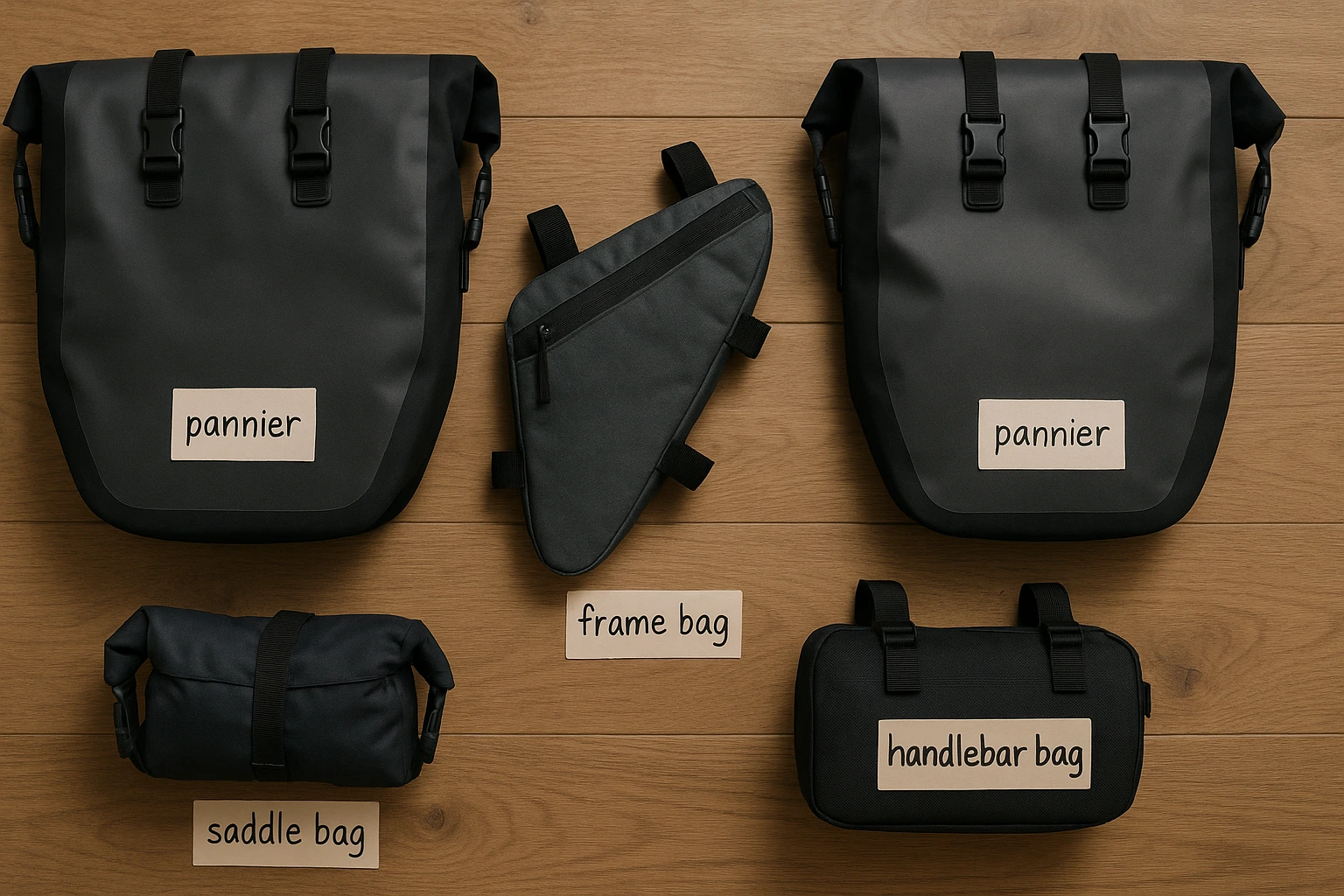
Best budget bikepacking bags: compatibility checks (read this first)
- Panniers: you’ll need a rack, and you should check heel clearance (your foot shouldn’t hit the bag while pedaling).
- Frame bags: triangle size matters; you may lose a bottle-cage spot.
- Saddle bags: overloading causes sway—keep heavy items low/center when possible.
- Handlebar bags: watch cable rub and steering feel; keep the front load compact.
Quick micro-scenario: if you’ve ever stood up to climb and felt the bike “wag” underneath you, your load is probably too high or too far back. That’s fixable.
RockBros Affordable Touring Panniers for Beginners
Best for: paved touring, heavier loads, and “I just want this to be stable.” Watch for: heel clearance and rack compatibility. Spacious and weather-resistant for the money, with a wider profile than bikepacking bags.
Blackburn Budget Frame Bag for Bikepacking
Best for: keeping weight centered (snacks/tools feel easy to reach). Watch for: bottle-cage space and triangle fit. A frame bag often makes the bike feel calmer on climbs and rougher patches.
Topeak Cheap Saddle Bag for Touring Beginners
Best for: rack-free setups and lighter packing. Watch for: sway when overloaded. If it wobbles, pull out bulky/light items first and keep dense gear lower and more centered.
| Bag Type | Brand/Model | Budget tier | Weight | Capacity |
|---|---|---|---|---|
| Panniers | RockBros Waterproof | Value | 2.2 lbs | 27L |
| Frame Bag | Blackburn Outpost | Mid | 0.5 lbs | 4–6L |
| Saddle Bag | Topeak BackLoader | Mid | 0.7 lbs | 6–15L |
If you’re specifically shopping for the best budget bikepacking bags, prioritize fit first and price second. A slightly pricier bag that fits your bike cleanly often saves you money in “replacement regret.”
Do this now: Measure your frame triangle and check heel clearance on your rack. Two minutes of measuring prevents the most annoying “why doesn’t this fit?” problems.
Why Budget Touring Gear Matters for Beginners
Budget gear helps you start sooner—and starting sooner is how you learn what you actually want. Many beginners overbuy before their first trip because it feels safer. The truth is: one overnight teaches more than ten hours of shopping.
- Shop smarter: last-season gear, used marketplaces, and local bike forums can cut costs fast.
- Upgrade with evidence: change one pain point at a time after a shakedown night.
- Go new for “trip-stoppers”: patches/levers, worn rain gear, anything safety-critical.
If you want a neutral, beginner-friendly overview from a reputable touring org, this Adventure Cycling Association guide is a solid reference: The gear you need to get started bike touring.
Start affordable, get outside, then upgrade what your first trip proves you need.
Next step: Pick one “no-regrets” buy for your next trip (usually carry + flat-fix + rain). Ignore everything else until after your shakedown.
Sleep System Picks That Don’t Break the Bank
Sleep is where a budget tour can go sideways fast. If you’re cold, uncomfortable, or damp, it’s hard to enjoy day two. On my first chilly overnight, the “upgrade” wasn’t a fancy stove—it was a better sleep setup.
Beginner reality checks (this prevents regret buys)
- Temperature ratings vary (often “survival,” not comfort): if you sleep cold, choose a warmer rating or plan warm layers.
- Bulk matters: budget sleep gear often packs larger—make sure your bag system can handle it.
- Ground insulation is not optional: your pad affects warmth as much as comfort.
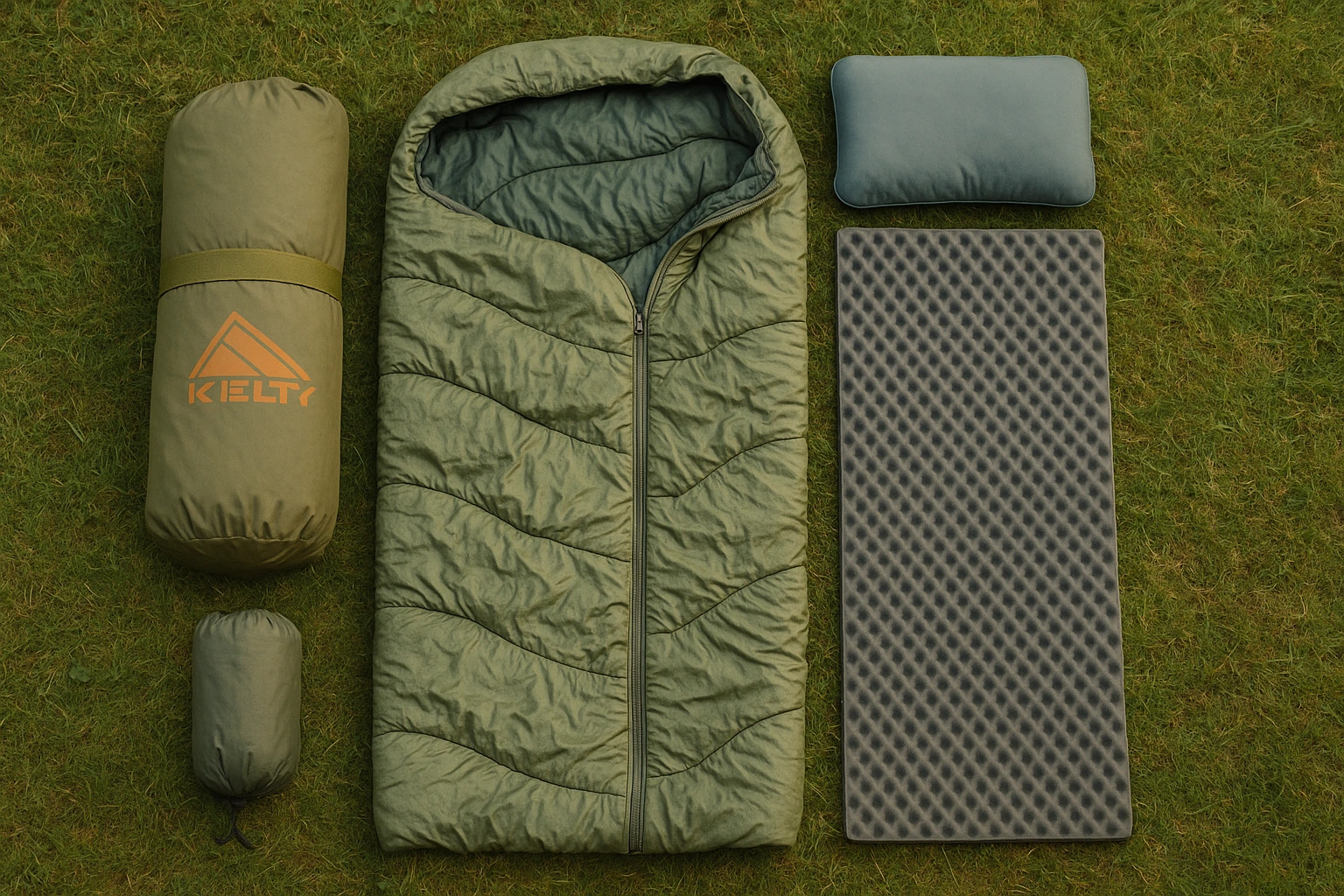
ALPS Mountaineering Lynx 1 Affordable Solo Tent for Beginners
Reliable starter protection and easy setup for the price. Trade-off: heavier/bulkier than true UL tents.
REI Co-op Trailbreak 30 Budget Sleeping Bag for Touring Beginners
Budget-friendly warmth that’s forgiving in damp conditions. Trade-off: bulkier than down, and comfort depends on whether you sleep warm or cold.
Therm-a-Rest Z Lite Sol Affordable Sleeping Pad for Beginners
Tough, simple, and nearly indestructible. Trade-off: bulky, and less plush than an inflatable.
If you want a smaller packed size later:
- Most packable + warmer: Therm-a-Rest NeoAir XLite NXT
- Budget inflatable alternative: Klymit Static V2 (choose insulated if nights are cool)
Do this now: Do one backyard (or living-room) test night. If you’re cold or miserable at home, it won’t get better outside.
Budget Tools and Repair
Flats happen. The scary part isn’t the flat—it’s the moment you realize you’ve never actually used your patch kit. If it’s 2 p.m. and sunny, you’ll be fine. If it’s 6 p.m. and you’re tired… you’ll want muscle memory.
Must-do before you leave: practice fixing a flat at home once. A patch kit is only “cheap” if you know how to use it.
Crankbrothers M19 Multi-Tool
A compact “mini shop” for common adjustments. Trade-off: it won’t replace a full workshop for complex fixes, but it covers the stuff that ends trips.
Tubes vs. tubeless: choose the right repair kit
- If you run tubes: levers + patches (and ideally a spare tube). This is the most common beginner setup.
- If you run tubeless: carry a plug kit for punctures too big for sealant (and top up sealant before longer trips).
Park Tool TL-1.2 Tire Levers
Rim-safe levers that handle stubborn tires without drama. Trade-off: super-tight beads still take patience.
Park Tool GP-2 Patch Kit
Fast, glue-free patches that are easy to learn. Trade-off: for repeated heavy use on longer tours, many riders later upgrade to glue-style patches.
PRO Bike Tool Tubeless Plug Kit (for tubeless riders)
Quick puncture plugs when sealant can’t handle it. Trade-off: only useful for tubeless tires (doesn’t replace tube patches).
Pump (compact): PRO Bike Tool Mini Pump
Compact and easy to stash in a bag. Trade-off: you’ll work harder to reach higher pressures than with a larger pump.

Next step: Time yourself doing one flat fix at home. If it takes 25 minutes today, that’s normal—do it once more and you’ll cut it in half.
Cooking with Budget Gear
Cooking is optional, but it can save money and make the trip feel calmer. A simple “boil water” setup can feel like a tiny luxury at the end of a long day.
Budget reality: the cheapest “cooking system” is no cooking. Many beginners do great with supermarket meals + sandwiches. If you do cook, start with “boil water” gear first.
MSR PocketRocket 2
Tiny, fast-boiling stove for coffee and simple meals. Trade-off: not great at simmering, and you’ll need canister fuel.
TOAKS Titanium 750ml Pot
Light and easy to clean. Trade-off: best for simple meals (solo portions).
Do this now: Decide if you’re truly cooking or just boiling water. If it’s “boil water,” don’t buy a full kitchen.
Clothing & Personal Essentials on the Cheap
Comfort issues sneak up on long rides. It’s usually not dramatic—it’s small friction that builds: chafing, damp socks, a rain jacket that turns into a sauna. Budget gear is fine here as long as it’s functional.
Frogg Toggs Ultra-Lite2 (budget rain layer)
Light, waterproof “emergency armor.” Trade-off: bulkier fit, and durability depends on how hard you ride in it.
Adventure Medical Kits Ultralight/Watertight .3 (small first-aid baseline)
Covers common scrapes in a compact package. Trade-off: you’ll still want to add personal meds or extras you like.

Do this now: Pack one riding set + one dry set. If you’re adding a third “just in case” outfit, pause and ask what problem it solves.
Works for Bikepacking Too (Small Differences)
Most beginner touring gear overlaps with beginner bikepacking gear. The main differences are about profile (how wide your setup is) and handling on rough surfaces.
- If you’ll ride rougher trails: favor frame + saddle + handlebar and keep heavy items centered.
- If you’ll ride mostly paved: panniers + rack are stable and beginner-friendly for bigger loads.
- What stays the same: sleep basics, rain gear, repair essentials, and the need for a shakedown ride.
Do this now: If your route is rough, commit to keeping your load narrower than your handlebars. It makes the bike feel dramatically more stable.
What NOT to Buy Yet
If you’re on a budget, the smartest move is avoiding “nice-to-have” gear until you’ve done at least one overnight shakedown. This is where most beginner overspending happens.
- Ultralight premium upgrades: great later, but the starter gear gets you outside now.
- Complicated cooking systems: boil water first; optimize after you learn your habits.
- Extra gadgets: buy what solves a real problem you experienced on the bike.
A quick reality check: cheap bike touring gear is fine for “nice-to-haves,” but don’t gamble on trip-stoppers (carry stability, rain protection, flat-fix essentials).
Next step: Make a “Not Yet” list. If it’s not required for safety, sleep, or fixing a flat, it goes there.
Upgrade Path After Your First Trip
After one overnight, upgrades become obvious. You’ll know what annoyed you most—because you’ll still be thinking about it in the shower the next morning.
- After 1 trip: upgrade the single biggest comfort issue (often sleeping pad or rain protection).
- After 3 trips: upgrade durability (bags/rack points, tent stakes, better pump).
- After a season: optimize weight/packability if you’re riding rougher routes or longer distances.
Best upgrade logic: fix the pain point that costs you sleep, time, or safety first.
Next step: After your first trip, write down the top 3 annoyances. Upgrade only #1. It keeps you from chasing gear for problems you don’t actually have.
Frequently Asked Questions
Many first-timers land around $300–$500 for a simple starter kit, depending on what you already own and whether you’re camping. Prices change a lot, so use “caps” per category and shop sales/used. Prioritize a stable carry system, a flat-fix kit, and a rain layer first.
Often, yes—if you stay within its limits and do a shakedown first. Test your setup on a loaded day ride, check bolts and rack mounts, and practice a flat fix at home. If anything fails those tests, replace it before a multi-week trip.
Your carry system and your flat-fix essentials come first—because they keep you moving. If you’re camping, sleep comfort is the next big lever for a good trip. Everything else is nice, but those pieces prevent the most common “trip-ending” problems.
Panniers are stable and forgiving for heavier loads (especially on paved routes). Saddle bags are great for rack-free setups, but they reward careful packing and can sway when overloaded. If you’re unsure, choose the option that fits your route and how much you’ll carry.
Look for last-season sales, used marketplaces, and local bike forums—especially for bags and camping items. For safety-critical basics (like worn rain gear or essential repair items), buying new can be worth it. Before you buy used, check zippers, seams, and mounting points.
Final Thoughts
Bike touring doesn’t need to break the bank. If you’re building bike touring gear for beginners, start with the essentials, run one shakedown ride, and let your first trip teach you what’s worth upgrading. If you want, use the planner above, copy your list, and treat it like a simple “buy next” plan—one item at a time.
Do this now: Pick a date for your shakedown ride this week. That’s the step that turns planning into a real trip.
This guide is general educational information, not personalized advice. Gear needs vary by route, weather, and rider, so results will differ. If you’re unsure about safety, fit, or setup, consider checking with a qualified bike shop or other professional before your trip.