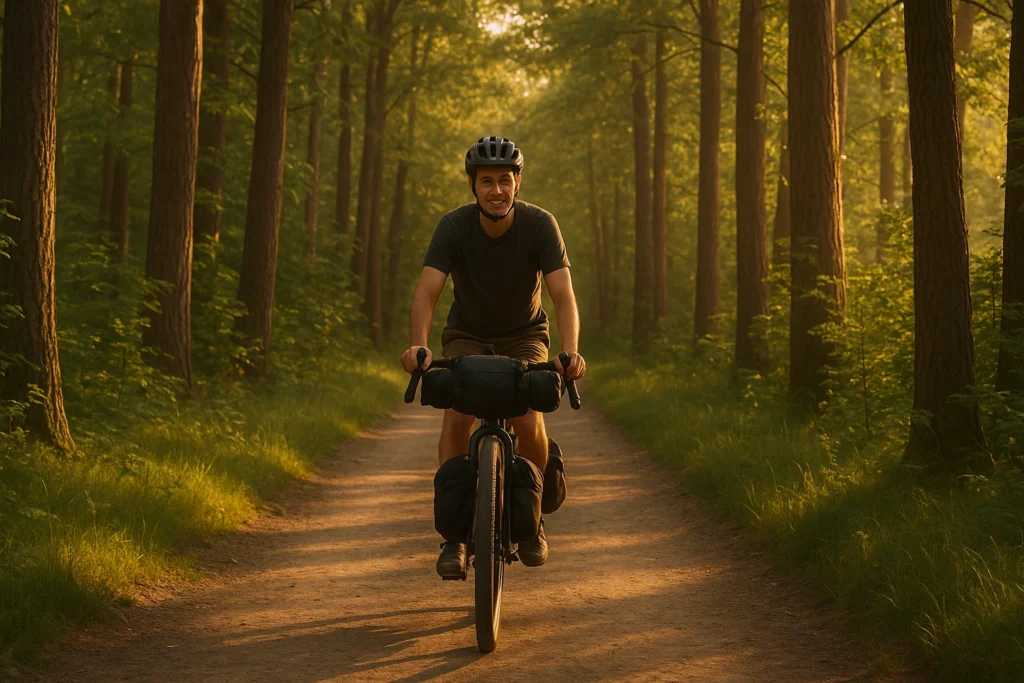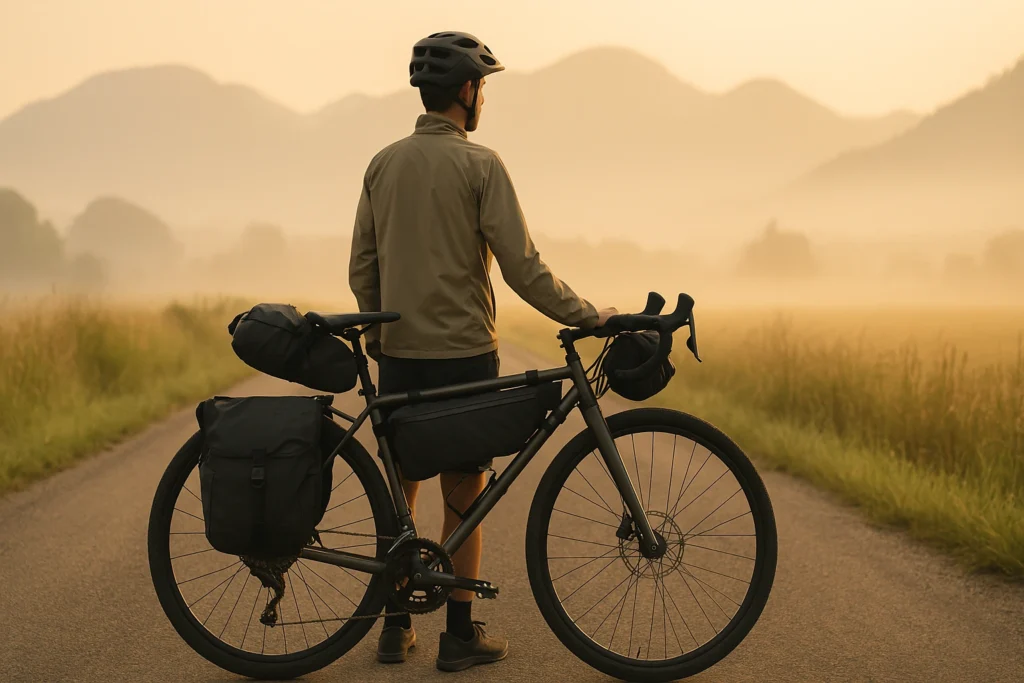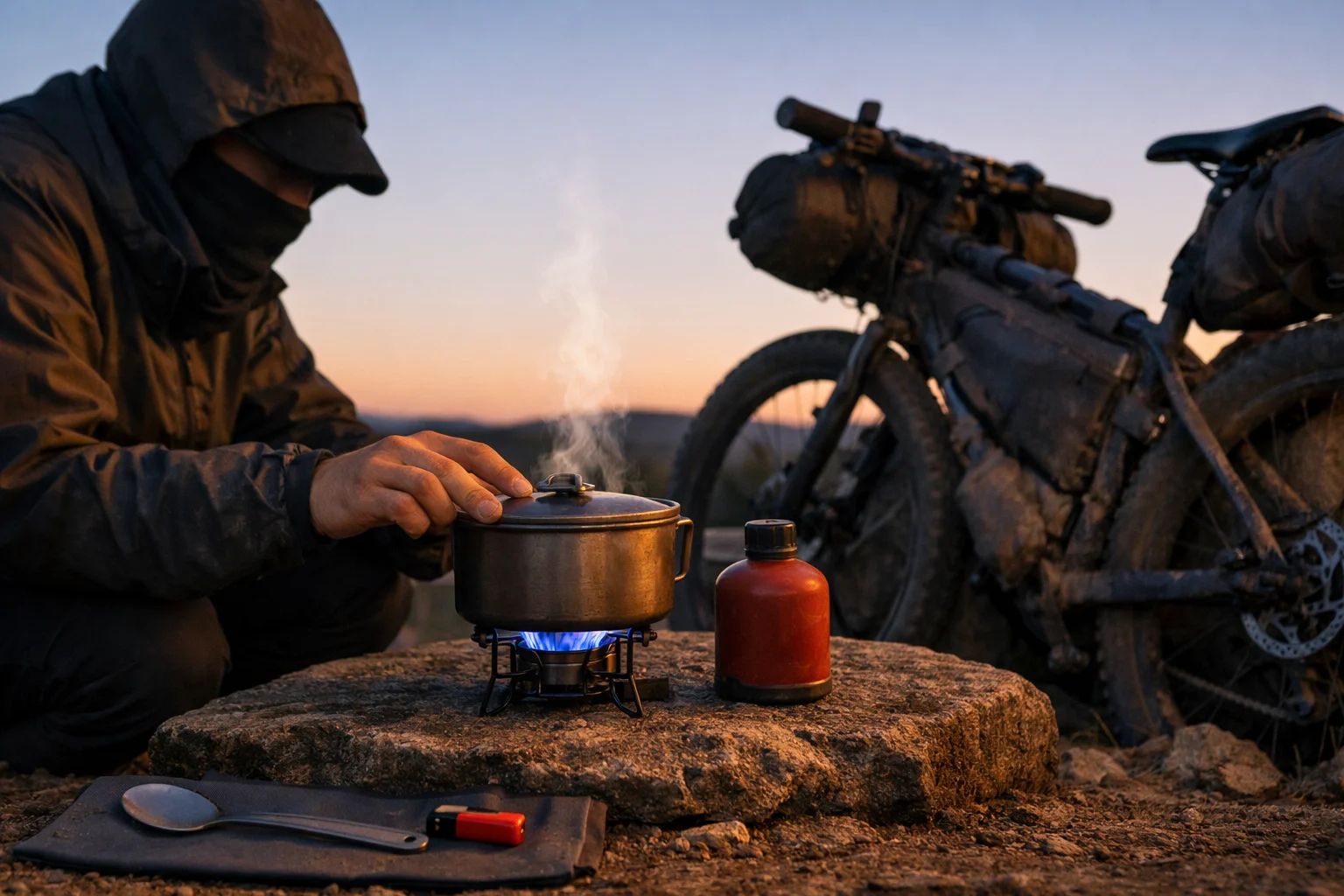
You’re 40 miles in, it’s getting cold, and dinner needs to happen fast. A bikepacking cooking system doesn’t need gadgets—it needs one reliable setup you’ll still use when you’re tired. Keep it small, repeatable, and easy to pack. That’s how you actually end the day with a hot meal.
When you’re riding big days with everything strapped to your bike, every ounce and every hassle matters. This guide gives you a few minimalist setups I’d pack right now (weights, what each piece does, and who it’s for). If you’ve ever tried to light a stove with cold hands while your brain is already in “sleep mode,” you’re exactly who this is for. For broader packing basics, see our bikepacking gear guide.
Your Best-Fit Bikepacking Cook Kit Tool
Pick what matches your route and habits—your recommendation updates instantly.
Route + weather
How you like to eat
Constraints
Recommendation: Fast Canister Micro-Kit
Great for most trips: quick boils, minimal fuss, easy to keep tidy.
💡 Tip: If it’s windy, add a simple windbreak and cook in a sheltered spot.
Minimal kit checklist
- Small canister stove
- 750–900ml pot + lid
- Long-handled spoon
- Mini lighter + backup matches
- Tiny scrub pad
This page contains affiliate links and may include sponsored content. As an Amazon Associate, I earn from qualifying purchases at no extra cost to you. Amazon links are labeled #ad; other affiliate links may be marked as “affiliate link,” “Sponsored,” or “(paid link).” Learn more.
Table of Contents
- Best-Fit Cook Kit Tool
- Key Takeaways
- Why Minimalist Cooking Wins for Long-Term Bikepacking
- Minimalist Setups That Actually Work
- Choose a stove fast (60 seconds)
- Go-To Templates (Buy-Anywhere Ingredients)
- Frequently Asked Questions
- Conclusion
Key Takeaways
Quick skim first—then use the tool above to sanity-check your kit for this specific route.
- Pick your stove by resupply: towns = canister; mixed = canister or alcohol; remote/cold = multi-fuel.
- Many “minimal” kits land around 250–450g: pot shape + lid matter more than extra gadgets.
- Boil-only wins on tour: 5–7 repeatable one-pot meals beats complicated cooking.
- Wind is the real enemy: shelter your cook spot before buying “more stove.”
- No-cook is a tool: mix in cold-soak nights to save fuel, time, and fuss.
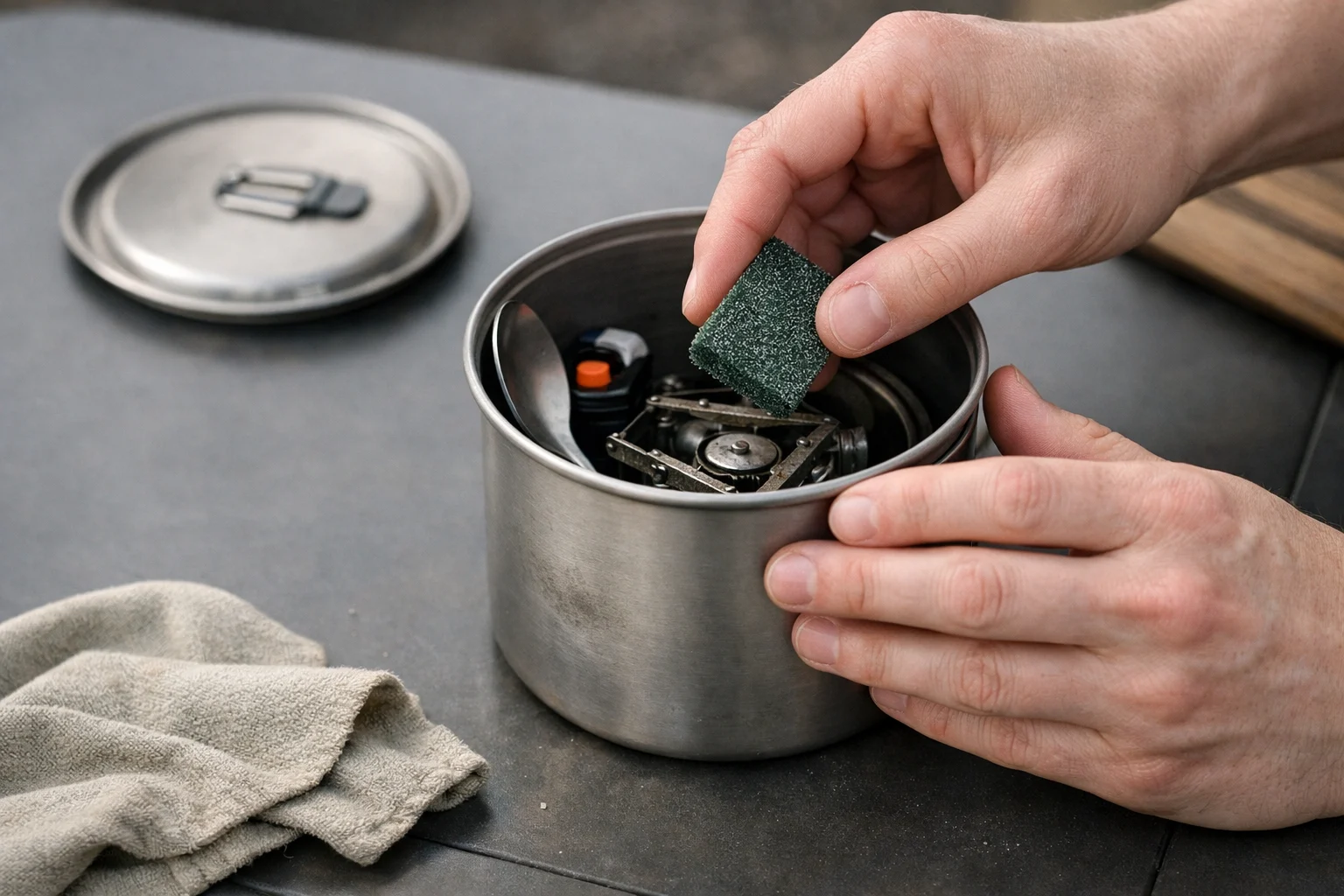
Micro-action: Pick one kit below and pack it into your pot right now. If it doesn’t nest cleanly in 60 seconds, remove one “extra.”
Why Minimalist Cooking Wins for Long-Term Bikepacking
Ever seen someone unpack half a kitchen… then stare at it like it’s homework? The longer the trip, the more you’ll love a cook kit that’s boring in the best way: quick, repeatable, and hard to mess up.
After a few trips where dinner became a headlamp scramble, I started optimizing for “boring and reliable”—because that’s what actually gets you fed when you’re wiped.
Less weight, less friction
That “small” extra item adds up after a week of climbs. And when your setup is simple, you’re not hunting for missing pieces at dusk.
Simple systems survive bad moments
When it’s raining, you’re hungry, and your hands are numb, complicated gear feels twice as annoying. On my longer tours, the kit I keep using is the one with the fewest decisions: stove, pot, spoon, lighter, tiny scrub pad.
Resupply gets easier
If your fuel plan is straightforward, your route isn’t dictated by “where can I find my exact thing?” That flexibility is what opens up better riding.
If you want to sanity-check your setup, do a quick “camp test” at home: set your pot and stove on a table, pretend it’s dark, and see if you can be cooking in under 120 seconds.
Minimalist Setups That Actually Work
Below are real-world minimalist cook kits for bikepacking setups that work on long tours. If you’ve ever finished a hard day, dug through bags in the dark, and thought “why is dinner this complicated?”—this section is for you. The weights are typical ranges (brands and pot sizes change the numbers), but they’re close enough to plan your packing honestly.
Ultralight bikepacking cook kit: what to cut first
If you’re chasing minimum weight, cut the “just in case” extras before you cut the basics. For an ultralight cooking kit bikepacking riders actually stick with, a lid, a reliable lighter (with backup), and a pot that’s big enough to actually eat from usually matter more than shaving 20 grams off a spoon.
1) Fast Canister Micro-Kit (best for most trips)
Small canister stove + 750–900ml pot/lid + long spoon + lighter.
Typical total: ~300–450g (stove ~60–110g, pot/lid ~120–200g, spoon/lighter ~30–60g).
Example stoves: compact upright canister burners. If you camp exposed a lot, prioritize wind resistance and a sheltered cook spot over “more stove.”
2) Budget Alcohol Kit (best for slow travel + quiet camp nights)
Alcohol burner + pot/lid + simple windscreen + lighter.
Typical total: ~250–400g (burner ~15–45g, windscreen ~15–40g, pot/lid ~120–200g).
Example burners: simple alcohol burners (Trangia-style) or DIY-style burners if you know what you’re doing.
3) Remote / Cold / High-Altitude Kit (best for long, remote routes)
Multi-fuel stove + fuel bottle + pot/lid + basic tool/spares.
Typical total: ~650–1,050g (stove ~250–450g, bottle empty ~150–250g, pot/lid ~150–250g).
Example stoves: WhisperLite-style or Omnifuel-style multi-fuel setups (more reliable, more maintenance).
4) No-Cook / Cold-Soak Kit (best for heat + simplicity)
Leakproof jar + spoon.
Typical total: ~120–250g depending on container.
Example containers: screw-top jars with a reliable seal (the “doesn’t leak in a frame bag” test matters).
Real-world picks (kept minimalist)
If you don’t want to overthink it: a small canister stove plus a 750ml pot covers most solo bikepacking cooking. Here are the only combos worth remembering.
| Setup | Stove | Pot | Best for |
|---|---|---|---|
| Default canister combo |
MSR PocketRocket Deluxe Easy, reliable, good control for real meals. |
TOAKS Titanium 750ml (bail handle) Sweet-spot size for solo: versatile without bulk. |
Most trips + most riders |
| Wind / exposed camps upgrade |
SOTO WindMaster Better choice when gusts are normal, not rare. |
750ml pot Stick with the same size; win on shelter, not gear bloat. |
Coastal / alpine / shoulder-season routes |
| UL boil-only swap | TOAKS Light 550ml Swap this in if you’re truly boil-only (coffee + quick meals). Tight for stirring. |
Ultralight, simple meals | |
Note: Weights vary by version and accessories (and don’t include fuel). Pick one setup and stop shopping.
If you want a “default answer” that’s easy to live with when you’re tired, choose a stove with clean lighting and decent control. It makes dinner feel simple instead of fiddly—especially when you’re cold and just want to be eating.
Hard to regret: MSR PocketRocket Deluxe — a reliable canister stove that keeps the “cook step” straightforward when you’re wiped.
Pair it with a simple 750ml pot, keep your cook spot sheltered, and you’ll get fast boils without overthinking your kit.
Once you’ve picked a stove you trust, the pot becomes the “home base” for your whole kit. The TOAKS Titanium 750ml (bail handle) is a solid sweet spot for most solo riders because it’s big enough to eat from without feeling bulky in a frame bag.
For utensils, a long-handled spoon makes one-pot dinners (and deep meal pouches) less annoying. The TOAKS Titanium Long Handle Spoon is a simple, hard-to-regret choice that cleans easily — and most riders eat straight from the pot anyway.
A reliable setup is only as good as the place you cook it—shelter matters more than most gear upgrades. Before you blame the stove, try cooking lower and out of the breeze.
Your “best” kit changes with the route. Mild + frequent resupply? Keep it simple. Remote or cold? A little extra reliability beats shaving grams.
How to Choose the Best Bikepacking Stove (In 60 Seconds)
- If you’ll resupply in towns and want fast boiling: go canister.
- If you’re riding slow, like simple/cheap, and temps are mild: alcohol can be great.
- If you’re crossing remote areas, cold nights, or uncertain fuel access: consider multi-fuel.
- If it’s hot, you hate cooking, or you want a lighter day: go no-cook/cold-soak.
If you’re choosing your first setup, the best bikepacking stove is usually the one you can reliably fuel on your route (not the one with the most features).
If you want a quick overview of stove types and fuel tradeoffs, start with REI’s backpacking stove guide. For bike-friendly options and real examples, Bikepacking.com’s stoves for bikepacking index is a great skim.
Fuel resupply note (the part that saves trips): canisters are easy in outdoor towns and bigger cities, but can be hard in small villages. Alcohol fuel is often easier to find in varied places, but it struggles more in cold and exposed camps. Multi-fuel wins for true remote routes—just expect some cleaning/maintenance. If you’re not sure what’s realistic for your temperatures and elevation, most reputable beginner stove explainers agree on the same theme: match your fuel to your worst-case night, not your best-case one.
Safety + rules (don’t skip this)
Ventilation matters: don’t cook in enclosed tents or vehicles—fuel-burning stoves can produce carbon monoxide. Cook outside or in a very well-ventilated shelter.
Fire restrictions are real: some areas restrict open flames, certain stove types, or any use during high fire danger. Before you roll out, check the local land-management or park guidance for your route.
Fuel compatibility: don’t assume every canister/stove combo is interchangeable. Follow the manufacturer’s instructions, and be cautious with adapters unless you fully understand the risks.
Common pitfalls to watch for: wind can wreck boil times, cold temps can make canisters feel “weak,” alcohol stoves aren’t great at real simmering, and multi-fuel stoves need occasional cleaning if you’re burning whatever you can find.
Quick check: Write down your next resupply town and choose the fuel you’re most likely to buy there. That one decision prevents most stove regret.
Go-To Templates (Buy-Anywhere Ingredients)
These are the meals that keep you moving because they’re easy to find, easy to cook, and forgiving when you’re tired. If you’re unsure, start with boil-only dinners and add variety slowly.
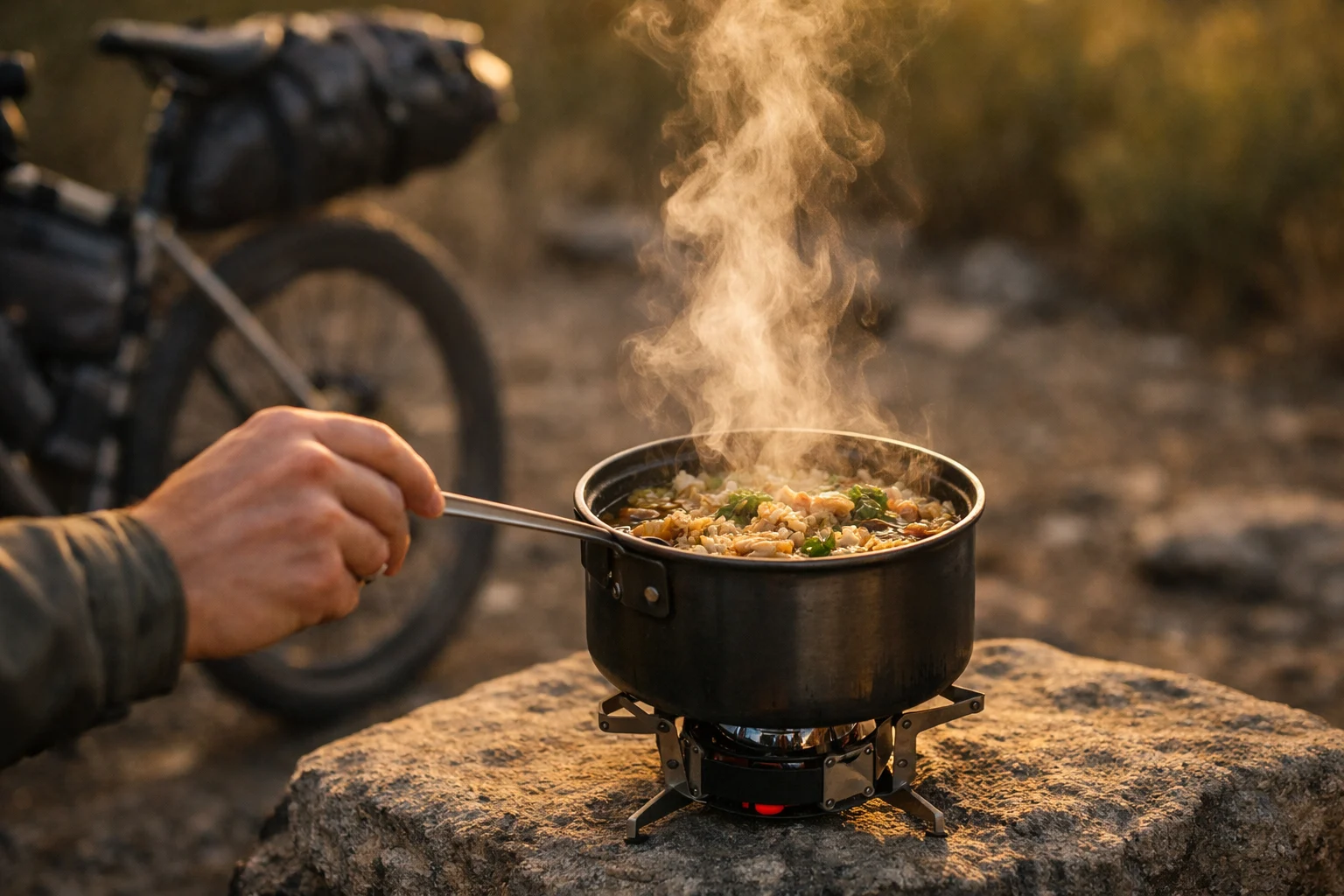
One-pot (5)
• Oats + nuts + dried fruit (breakfast)
• Couscous + tuna/beans + olive oil (fast dinner)
• Ramen + eggs/jerky + greens (salty recovery)
• Instant mash + cheese + salami (cold-night comfort)
• Rice/noodle packet + curry/soup mix + canned veg (big calories)
On the tired nights, cold meals can save the day. You’re not failing—you’re just choosing the easiest path to “fed.”
No-cook bikepacking meals (3)
• Cold-soaked oats (overnight)
• Couscous + olive oil + spices (10–15 min)
• Tortillas + peanut butter + bananas (no mess)
Coffee on the road (optional)
If coffee is part of your “reset,” a compact press is the easiest way to get a genuinely good cup without turning mornings into a cleanup project.
AeroPress Go
Small, quick, real coffee without instant compromise.
Keep it simple: pre-ground coffee + a quick rinse is the whole routine—no extra gadgets required.
Frequently Asked Questions
Conclusion
A bikepacking cooking system wins when it’s fast, reliable, and easy to live with day after day. Use the tool to match your stove style to your route, then keep your meals basic and repeatable. When it’s late and you’re hungry, a minimalist bikepacking cook kit you trust is what gets you fed with minimal fuss—so recovery (and tomorrow’s ride) stays on track.
Micro-action: Before your next trip, do one full “cook cycle” at home: boil water, eat from the pot, and clean up. If any step annoys you, simplify that step.
This guide is for general education only and isn’t personalized advice. Stove safety, fuel rules, and local fire restrictions vary—if you’re unsure what’s appropriate where you’re riding, check local guidance or ask a qualified professional/outfitter. Your conditions and results may vary depending on weather, elevation, and experience.