Last updated: July 2026.
Ever hit camp soaked, hungry, and out of patience for dishes? These one pot bikepacking meals are built for that moment—big calories, short cook times, and a single pot to rinse before you crash.
Below you’ll get a quick meal picker, a minimal cooking kit that actually works, and 12 recipes built around shelf-stable staples—with clear fridge-free swaps where a recipe normally uses eggs. If you’re building the rest of your setup too, use the bikepacking gear guide to plan the full system beyond meals and cooking.
This page contains affiliate links and may include sponsored content. As an Amazon Associate, I earn from qualifying purchases at no extra cost to you. Amazon links are labeled #ad; other affiliate links may be marked as “affiliate link,” “Sponsored,” or “(paid link).” Learn more.
Table of Contents
- One-Pot Meal Picker
- Why One-Pot Meals Rule the Road 🚴♂️
- No-Fridge Rules: Calories, Cook Time, Cleanup
- Minimal One-Pot Cooking Kit (What You Actually Need)
- 12 Simple One Pot Bikepacking Meals That Actually Taste Good
- Smart Ingredient Sourcing on the Road
- Diet Tweaks: Vegan, Gluten-Free, Higher Protein
- Packing and Storage Tips
- Troubleshooting Common Cooking Challenges
- Bikepacking Meal FAQs
- Choose Three Meals and Test One at Home
Not sure where to start? Try the quick picker below, then compare all 12 recipes when you want more options.
One-Pot Meal Picker
Choose one answer in each row for a primary recipe, backup, and estimated cook time.
What matters most tonight?
Any diet constraints?
How tight is your stove fuel?
Complete the three choices
Your match will include one recipe, one backup, and the estimated cook time.
Use the linked result to jump straight to the recipe, or keep reading for the no-fridge rules behind the picks.
Why One-Pot Meals Rule the Road 🚴♂️
When you’re carrying everything on your bike, every ounce matters. One pot bikepacking meals cut down cookware, prep, and cleanup. But the bigger win is mental: when you’re cooked at the end of the day, simple dinners are the ones that actually happen.
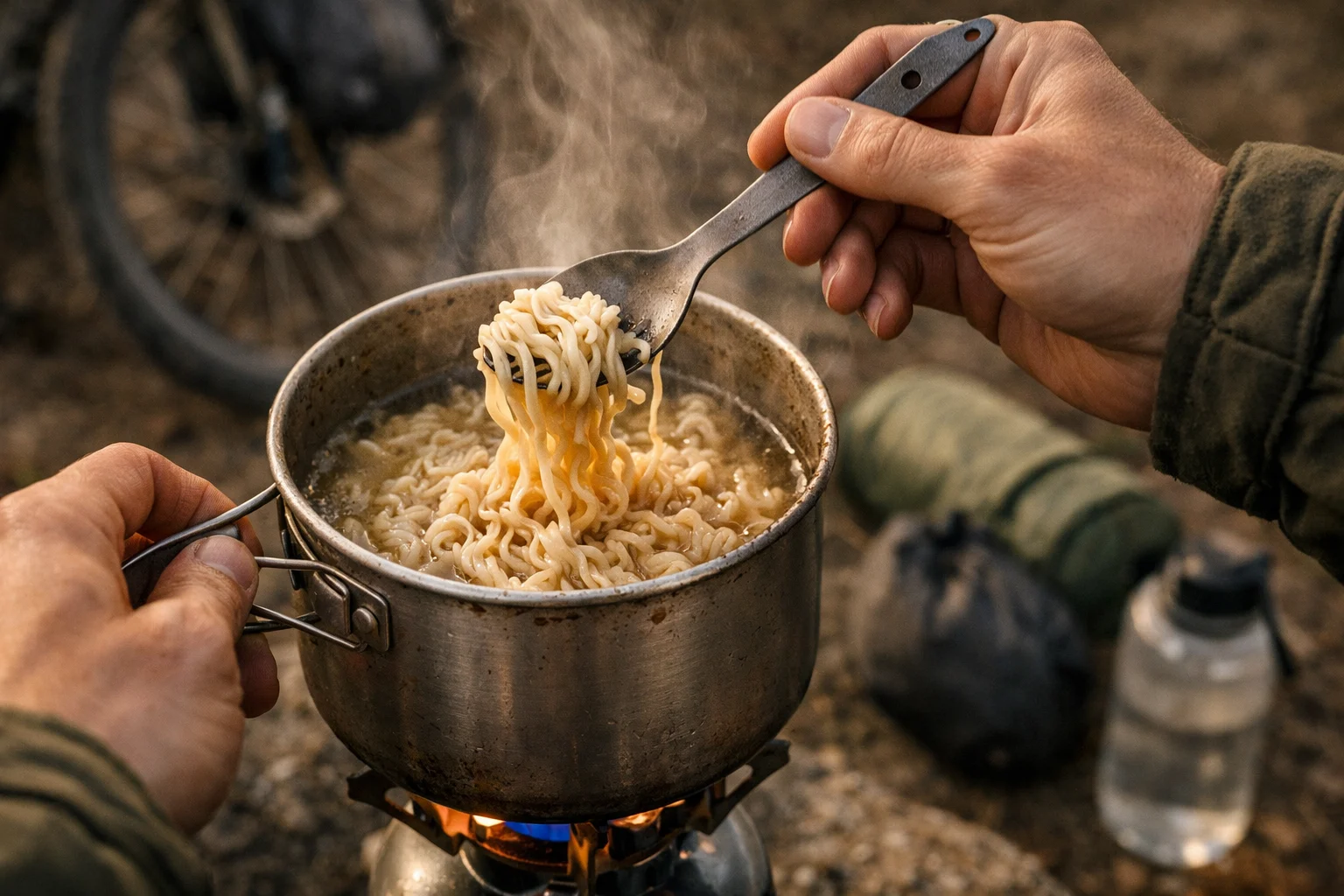
Time efficiency – After a long day, you want food fast. Many one-pot meals cook in about 8–20 minutes with minimal effort.
Fuel conservation – One burner and one pot stretches your fuel, which matters when resupply is uncertain.
Easy cleanup – One pot means one thing to wash. When it’s cold or raining, that’s huge.
I learned this the hard way on my first tour: I packed a “full camp kitchen” and hated my life by day three. That’s when I switched to easy bikepacking recipes that were tough to mess up and easy to clean.
No-Fridge Rules: Calories, Cook Time, Cleanup
The Calorie-to-Weight Ratio Game
On tour, you don’t need perfect numbers—you need foods that pack small and actually satisfy you. Here’s a simple hierarchy that works well for most riders:
| Food Category | Energy density | Examples |
|---|---|---|
| Oils & Fats | Very high | Olive oil, coconut oil, nuts |
| Shelf-stable proteins | High | Canned fish/beans, lentils, nut butter |
| Fast carbs | Medium | Pasta, rice, oats, quinoa |
| Flavor boosters | Low (but worth it) | Spice mixes, bouillon, hot sauce |
Cook Time Considerations
Under 15 minutes: Pasta, instant rice, couscous, ramen
15–25 minutes: Regular rice, quinoa, lentils
25+ minutes: Pearl barley, steel-cut oats, and dried beans (often much longer unless pre-soaked)
For these one-pot meals on tour, stick to the first two categories most nights. Anything that routinely takes 30+ minutes burns fuel and patience.
The No-Refrigeration Rule
For a truly fridge-free trip, every ingredient needs to survive without cooling for days. Fresh eggs are the exception in two recipes below; use shelf-stable powdered egg unless you can keep them properly chilled. That’s why no-refrigeration bikepacking meals lean on shelf-stable staples:
- Shelf-stable proteins: Canned fish or beans, lentils, nuts, seeds
- Preserved vegetables: Sun-dried tomatoes, dried mushrooms
- Long-lasting fresh items: Onions, garlic, potatoes, carrots
- Flavor enhancers: Hot sauce, dried herbs, bouillon cubes
Cooking water note: These meals usually need 1–2 cups of treated water plus a little for rinsing. Carry a filter or purification method suited to your route, with a lightweight backup on remote stretches.
For an authoritative refresher on food handling outdoors, see USDA FSIS guidance on food safety while hiking and camping. For the egg recipes below, use shelf-stable powdered egg on fridge-free trips; USDA guidance says shell eggs should stay refrigerated and should not sit out for more than two hours—or one hour above 90°F (32°C). See shell egg safety.
Minimal One-Pot Cooking Kit (What You Actually Need)
After testing a bunch of setups, the best kit is the one that’s simple and dependable. When you’re tired, fewer pieces means fewer headaches.
Essential Cookware
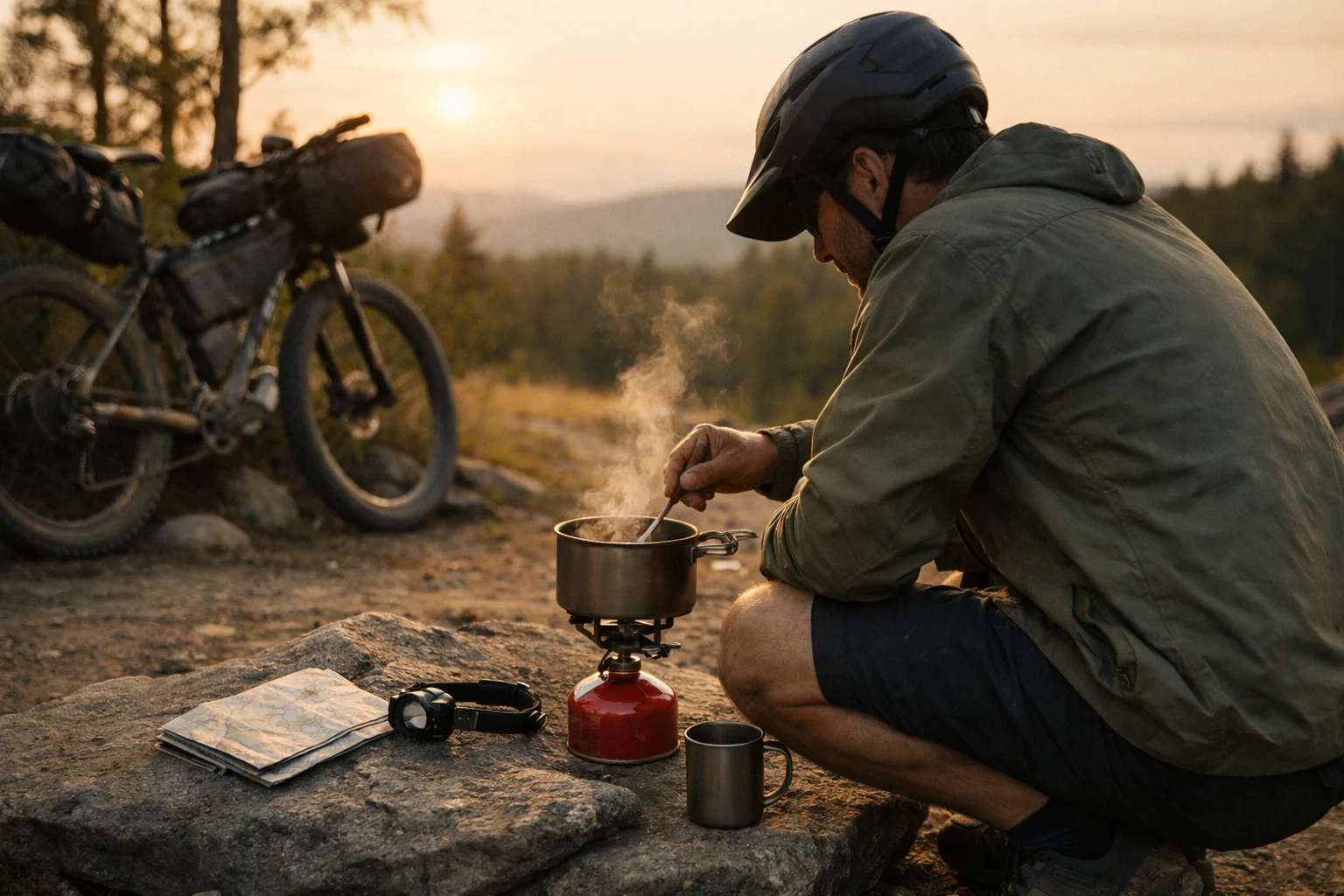
Here’s the simplest “real-life” one-pot setup: one good pot, one reliable stove, one long utensil. Everything else is optional.
Pot size: Around 750ml is a practical solo capacity—enough room to stir oats or noodles without carrying a larger group pot.
Core pick: TOAKS Titanium 750ml Pot with Bail Handle — 3.9 oz, with measurement marks and room to nest a 110g canister.
Compact canister stove: SOTO WindMaster stove – Compact and consistent in wind, which helps on exposed campsites.
Need to compare stove types, wind performance, fuel use, and complete cook-kit setups? See the bikepacking cooking system guide.
Utensil default: TOAKS Titanium Long Handle Spoon (Polished Bowl) – A pure spoon (no tines), so it scrapes the pot clean and works better for oats, rice, and saucy meals. It’s also easier to rinse and less likely to snag or poke meal bags than a spork.
If you prefer a spork: the TOAKS Titanium Long Handle Spork (Polished Bowl) uses the same long handle, with small tines for noodles or chunks; it still reaches into deep pots.
Nice-to-Have Additions
- Pot cozy – Keeps food warm and can finish a meal off-flame
- Small cutting tool – For garlic, onions, and basic prep
- Lightweight pot gripper – Helpful if your pot lacks a handle
- Collapsible bowl (optional) – Handy for sharing portions or keeping your pot clean for round two; otherwise most riders can eat straight from the pot to save weight and dishes.
Reality check: totals vary based on materials and what you already own. The goal isn’t “perfect ultralight,” it’s a simple kit you’ll actually use.
12 Simple One Pot Bikepacking Meals That Actually Taste Good
Before the recipes, here’s the simple format I use on tour so dinner stays predictable. These easy bikepacking recipes all follow the same pattern: fast carb + protein + fat + something salty/spicy. That’s it.
Field notes: Serves 1 hungry rider (or 2 smaller portions). Water usually lands around 1.25–2 cups depending on pasta/rice. Calories are ballpark—oil, nuts, and portion size swing the total a lot.
Recipes at a Glance
Need a fast scan? Compare these simple bikepacking meal ideas by cook time and dietary fit, then jump straight to the recipe.
| Recipe | Cook time | Diet notes |
|---|---|---|
| 1. Mediterranean Pasta Power Bowl | 12 minutes | GF-adaptable |
| 2. Spicy Peanut Noodle Fuel | 8 minutes | Vegan, GF-adaptable |
| 3. Hearty Lentil and Rice Recovery | 22 minutes | Vegan, Gluten-free |
| 4. Breakfast Oat Power Bowl | 7 minutes | Vegan, GF-adaptable |
| 5. Cheesy Quinoa Comfort Bowl | 18 minutes | Vegan, Gluten-free |
| 6. Asian-Style Ramen Upgrade | 6 minutes | GF-adaptable |
| 7. Mexican Black Bean Rice Bowl | 8 minutes | Vegan, Gluten-free |
| 8. Mushroom Barley Comfort Food | 35 minutes | Vegan |
| 9. Protein-Packed Chickpea Curry | 15 minutes | Vegan, Gluten-free |
| 10. Sweet and Savory Couscous | 7 minutes | Vegan |
| 11. Hearty Potato Hash | 22 minutes | Gluten-free |
| 12. Simple Salmon Rice Bowl | 8 minutes | Gluten-free |
1. Mediterranean Pasta Power Bowl (GF-adaptable)
Ingredients:
- 4 oz whole wheat pasta (or gluten-free pasta)
- 1 can salmon or tuna
- 2 tbsp olive oil
- 1/4 cup sun-dried tomatoes
- 2 cloves garlic, minced
- Italian herbs, salt, pepper
Steps:
- Boil pasta according to package directions
- Drain, reserving 1/2 cup pasta water
- Add oil, garlic, and sun-dried tomatoes
- Stir in fish and herbs
- Add pasta water if needed for consistency
Calories: ~850 | Cook time: 12 minutes
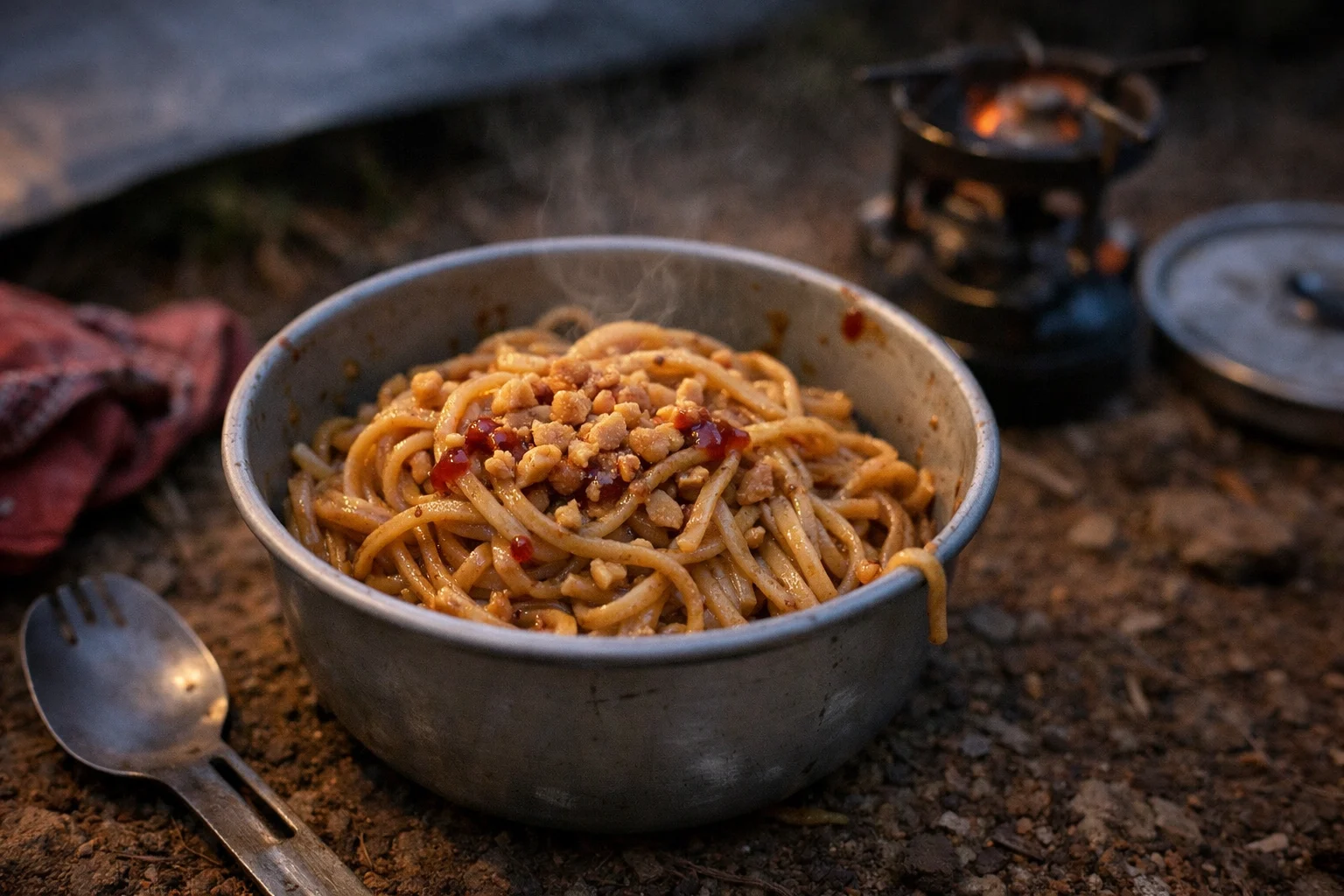
2. Spicy Peanut Noodle Fuel (Vegan, GF-adaptable)
Ingredients:
- 4 oz rice noodles
- 3 tbsp peanut butter
- 2 tbsp soy sauce or gluten-free tamari
- 1 tbsp sriracha
- 1 tbsp brown sugar
- 1/4 cup peanuts
Steps:
- Cook noodles per package directions
- Drain, reserving cooking water
- Mix peanut butter, soy sauce, sriracha, and sugar
- Toss with noodles, adding cooking water to thin
- Top with peanuts
Calories: ~920 | Cook time: 8 minutes
3. Hearty Lentil and Rice Recovery (Vegan, Gluten-free)
Ingredients:
- 1/2 cup red lentils
- 1/2 cup instant rice
- 1 vegan, gluten-free bouillon cube
- 1 onion, diced
- 2 tbsp olive oil
- Curry powder, salt
Steps:
- Sauté onion in oil until soft
- Add lentils and 2 cups water
- Add bouillon cube and curry powder
- Simmer 15 minutes until lentils are soft
- Stir in rice, cover, let stand 5 minutes
Calories: ~780 | Cook time: 22 minutes
4. Breakfast Oat Power Bowl (Vegan, GF-adaptable)
Ingredients:
- 1 cup rolled oats (certified gluten-free if needed)
- 2 tbsp chia seeds
- 1/4 cup dried fruit
- 2 tbsp nuts
- 1 tbsp maple syrup (or honey if not vegan)
- Cinnamon
Steps:
- Bring 2 cups water to boil
- Add oats and chia seeds
- Simmer 5 minutes, stirring occasionally
- Remove from heat, add dried fruit
- Top with nuts, sweetener, and cinnamon
Calories: ~650 | Cook time: 7 minutes
5. Cheesy Quinoa Comfort Bowl (Vegan, Gluten-free)
Ingredients:
- 3/4 cup quinoa
- 1/4 cup nutritional yeast
- 2 tbsp olive oil
- 1 can diced tomatoes
- Garlic powder, salt, pepper
Steps:
- Rinse quinoa in pot
- Add 1.5 cups water and bring to boil
- Reduce heat, simmer covered 15 minutes
- Stir in tomatoes, nutritional yeast, oil
- Season to taste
Calories: ~720 | Cook time: 18 minutes
6. Asian-Style Ramen Upgrade (GF-adaptable)
Ingredients:
- 2 packages ramen (use gluten-free noodles if needed; discard flavor packets)
- Shelf-stable powdered egg equivalent of 2 eggs (or 2 fresh eggs kept safely chilled)
- 2 tbsp soy sauce or gluten-free tamari
- 1 tbsp sesame oil
- 1 tsp garlic powder
- Green onions if available
Steps:
- Boil water and cook ramen 2 minutes
- Prepare the powdered egg according to the package, or use safely chilled fresh eggs
- Stir into the hot noodles and cook until fully set
- Add soy sauce, sesame oil, garlic powder
- Garnish with green onions
Calories: ~580 | Cook time: 6 minutes
7. Mexican Black Bean Rice Bowl (Vegan, Gluten-free)
Ingredients:
- 1 can black beans
- 3/4 cup instant rice
- 1 packet gluten-free taco seasoning
- 2 tbsp olive oil
- Hot sauce to taste
- Lime juice if available
Steps:
- Heat beans with their liquid
- Add taco seasoning and oil
- Bring to boil, add rice
- Cover, remove from heat, let stand 5 minutes
- Fluff and season with hot sauce and lime
Calories: ~680 | Cook time: 8 minutes
8. Mushroom Barley Comfort Food (Vegan)
Ingredients:
- 1/2 cup pearl barley
- 1 oz dried mushrooms
- 1 vegan bouillon cube
- 2 tbsp olive oil
- Dried thyme
- Salt and pepper
Steps:
- Soak mushrooms in warm water 10 minutes
- Combine barley, mushrooms, soaking liquid in pot
- Add bouillon cube and 2 cups water
- Simmer covered 25 minutes
- Stir in oil and seasonings
Calories: ~580 | Cook time: 35 minutes
9. Protein-Packed Chickpea Curry (Vegan, Gluten-free)
Ingredients:
- 1 can chickpeas
- 1 can coconut milk
- 1 tbsp curry powder
- 1 onion, diced
- 2 tbsp oil
- Salt to taste
Steps:
- Sauté onion in oil until golden
- Add curry powder, cook 1 minute
- Add chickpeas with liquid and coconut milk
- Simmer 10 minutes until thickened
- Season with salt
Calories: ~890 | Cook time: 15 minutes
10. Sweet and Savory Couscous (Vegan)
Ingredients:
- 1 cup couscous
- 1/4 cup dried cranberries
- 1/4 cup almonds
- 2 tbsp olive oil
- 1 vegan bouillon cube
- Cinnamon
Steps:
- Bring 1.25 cups water to boil with bouillon cube
- Add couscous, cover, remove from heat
- Let stand 5 minutes
- Fluff with fork, add remaining ingredients
- Mix well and serve
Calories: ~720 | Cook time: 7 minutes
11. Hearty Potato Hash (Gluten-free)
Ingredients:
- 2 medium potatoes, diced small
- 1 onion, diced
- 3 tbsp oil
- Shelf-stable powdered egg equivalent of 2 eggs (or 2 fresh eggs kept safely chilled)
- Salt, pepper, paprika
Steps:
- Heat oil in pot over medium heat
- Add potatoes, cook covered 15 minutes, stirring occasionally
- Add onion, cook 5 minutes more
- Pour in prepared powdered egg, or crack in safely chilled fresh eggs
- Cover and cook until the egg is fully set
Calories: ~650 | Cook time: 22 minutes
12. Simple Salmon Rice Bowl (Gluten-free)
Ingredients:
- 1 can salmon
- 3/4 cup instant rice
- 2 tbsp olive oil
- 1 tbsp gluten-free tamari
- Dried dill
- Lemon pepper
Steps:
- Bring 1.5 cups water to boil
- Add rice, cover, remove from heat
- Let stand 5 minutes
- Fluff rice, add salmon and oil
- Season with soy sauce, dill, and lemon pepper
Calories: ~720 | Cook time: 8 minutes
Smart Ingredient Sourcing on the Road
For daily calorie planning, ride snacks, hydration, and town resupply—not just dinner—use the trail nutrition and food guide for long tours.
Grocery Store Strategy
- Canned goods – Proteins, tomatoes, coconut milk
- Dried goods – Pasta, rice, lentils, oats
- International foods – Often cheaper spices and sauces
- Nuts and dried fruits – Calorie-dense trail additions
Small Town Shopping Tips
When you’re limited to a gas station or corner store:
- Instant oatmeal packets make quick breakfast bases
- Peanut butter packets from the condiment section
- Hot sauce packets for flavor without weight
- Nuts from the snack aisle for protein and calories
Bulk Buying Strategy
- Spice mixes in small containers or bags
- Oil portions in small bottles (double-bag)
- Dried herbs in tiny containers for easy dispensing
Diet Tweaks: Vegan, Gluten-Free, Higher Protein
Vegan One-Pot Options
Most of these meals are naturally no-fridge friendly. If you’re eating vegan on tour, swap fish/eggs for extra beans, lentils, or nuts, and lean on coconut milk or nutritional yeast for richness. If you want the simplest label for it: vegan bikepacking meals work best when you add fat (oil/nuts) so the meal actually sticks.
Gluten-Free Adaptations
- Rice noodles instead of wheat pasta
- Quinoa replaces wheat-based grains
- Rice works in most applications
- Check bouillon cubes – many contain gluten
High-Protein Modifications
For riders needing extra protein:
- Add protein powder to oatmeal
- Double the nuts in any recipe
- Include hemp hearts if you already use them
- Pack extra canned fish for easy protein boosts
Packing and Storage Tips
Ingredient Organization
Daily meal bags work better than bulk storage:
- Pre-portion dry ingredients by meal
- Include cooking instructions on each bag
- Pack spices and oils separately to prevent leaks
- Use different colored bags for breakfast, lunch, dinner
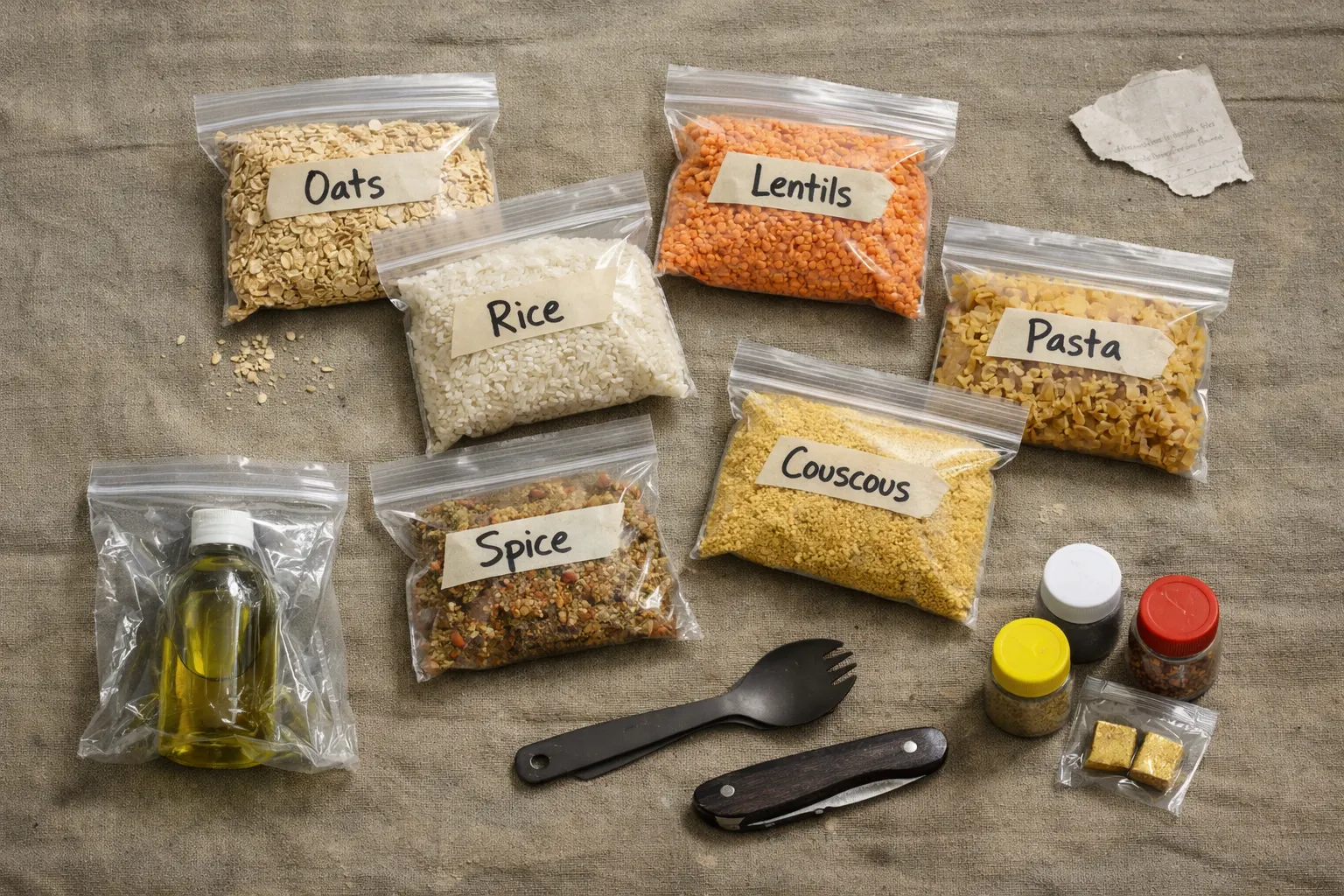
Here’s the packing rule I wish someone told me early: separate what leaks from what you can’t afford to soak. Oils and sauces get double-bagged and ride away from your sleeping kit. Dry meal bags live together and are labeled, so you’re not digging at dusk.
Preventing Food Disasters
Double-bag anything liquid – oil leaks ruin everything
Keep backup meals simple – instant oatmeal and peanut butter packets
Pack extra calories – aim for a little more than you think you need
Store food away from gear – follow local rules in bear country
Temperature Considerations
In hot weather:
- Eat perishables first (fresh onions, garlic)
- Avoid melt-prone items that turn into a mess
- Increase water intake with meals
Troubleshooting Common Cooking Challenges
Altitude Adjustments
Above 5,000 feet, some foods can take longer to soften. Keep it simple:
- Add extra water – things dry out faster
- Increase cook time as needed
- Bring water to a full boil before adding ingredients
- Cover pots to retain heat and moisture
Weather Adaptations
Windy conditions:
- Move behind a natural windbreak or use a stove with built-in wind protection; do not add a wraparound windscreen to an upright canister stove unless its manufacturer explicitly allows it
- Choose recipes requiring less precise timing
- Pre-boil water in sheltered areas when possible
Rain cooking:
- Cook outdoors in a well-ventilated, fire-safe spot; never run a stove inside a tent, vehicle, or enclosed shelter
- Use a pot lid to prevent water getting in food
- Have backup cold meal options ready
Bikepacking Meal FAQs
Choose Three Meals and Test One at Home
Your best meal plan is one you can follow when you’re tired, cold, or running late. Choose three meals you’d genuinely want after a long day, then cook one at home and write its water amount and cook time on the meal bag. That single test removes most camp-night guesswork.
This guide is general education only, not personalized nutrition, medical, or safety advice. Needs and conditions vary by route, weather, and your body. If you have allergies, medical concerns, or special dietary needs, consider checking in with a qualified professional before your trip.