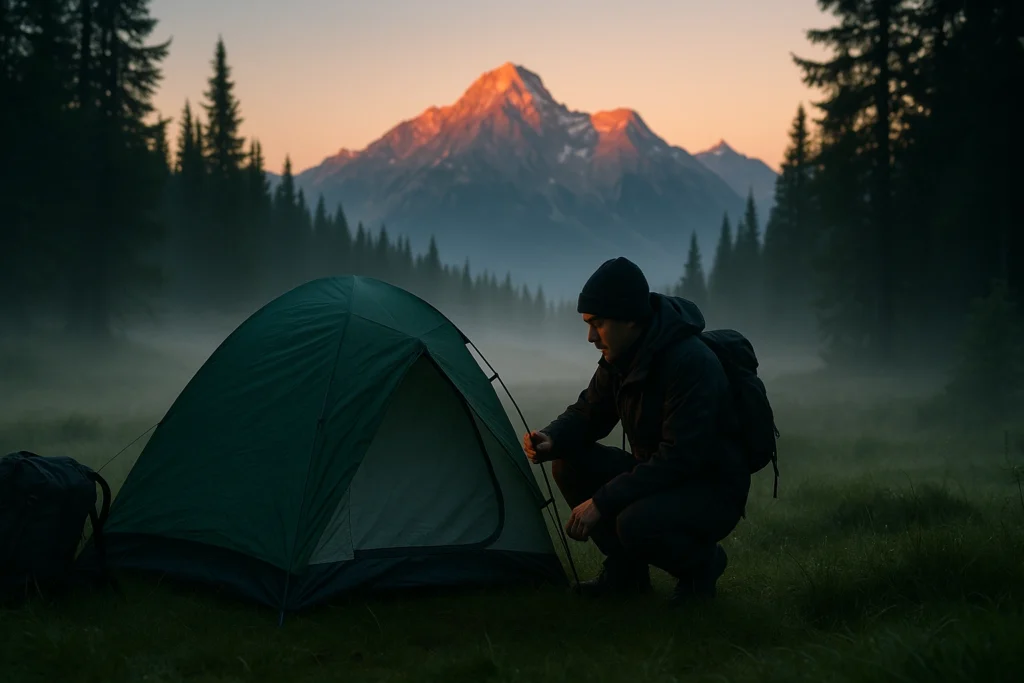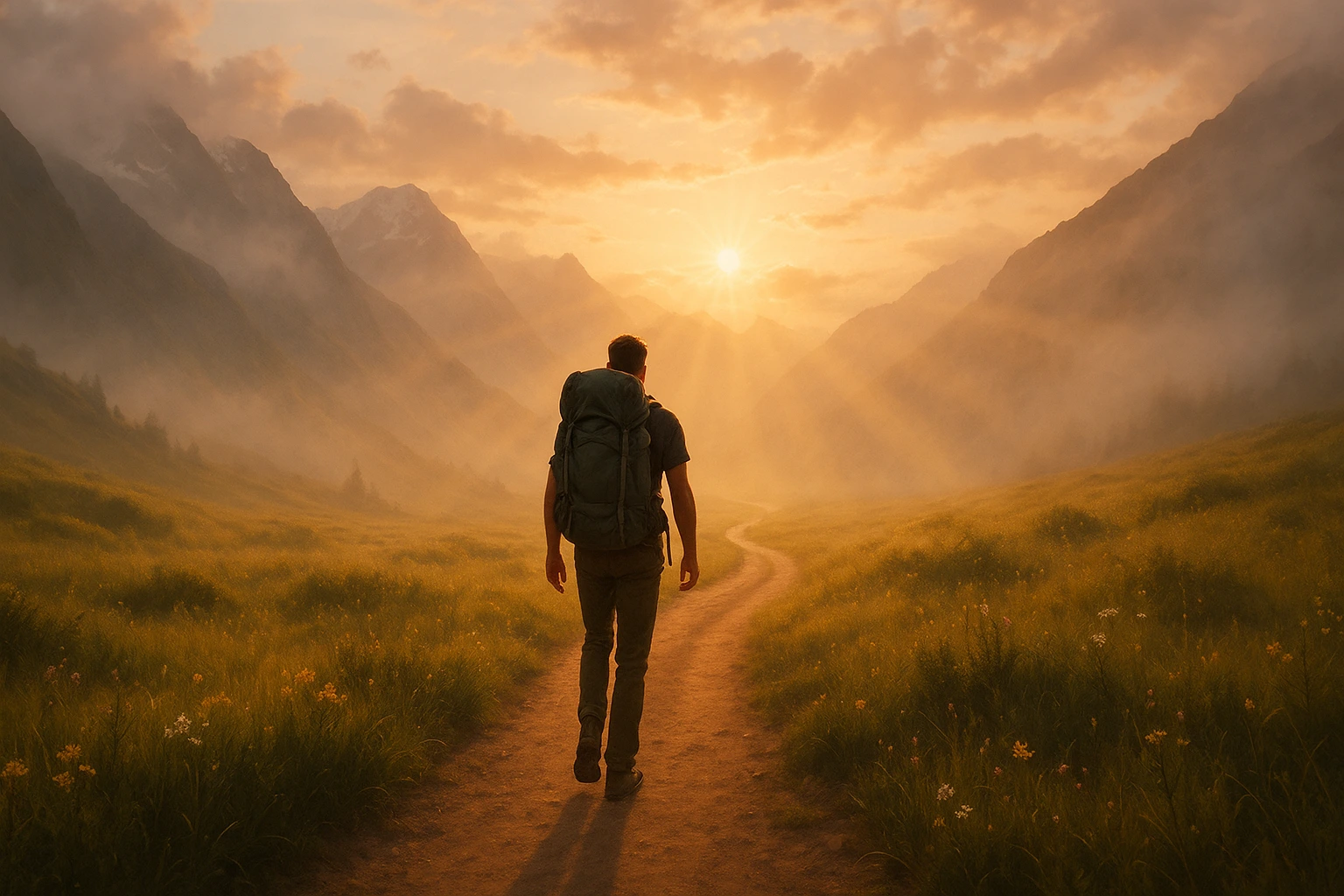
Have you ever felt that itch to grab a backpack and chase something deeper than a quick vacation? Not just “time off,” but a trip that shifts how you see your life when you get back. Sound familiar? Traveling with purpose isn’t about checking landmarks off a list—it’s about the tiny choices that help you learn from the trip.
Traveling with purpose means intentionally choosing experiences and taking time to reflect, so a trip creates room for real growth—not just sightseeing. For me, bikepacking became the clearest version of that: moving slowly, carrying only what I needed, and having enough quiet for the lessons to catch up with me. The ideas here still work on any trip, from a weekend away to a multi-month tour.
If you’re busy, broke, or in a “maybe later” season, that’s okay. Purpose can start small.
Quick framework — Before / During / After: Before you go, choose one value and one question. During the trip, say one “local yes” each day. Afterward, keep one small change that still feels useful at home.
Table of Contents
- From Autopilot to Intentional Travel
- Find Your Purposeful Travel Starting Point
- Lesson 1: Kindness Can Appear Where You Least Expect It
- Lesson 2: Minimalist Living on the Road
- Lesson 3: Facing Challenges with Intention
- Lesson 4: Finding Connection While You Travel
- Lesson 5: Resilience Lessons from the Road
- Lesson 6: Self-Discovery Through Travel
- How Travel Changes Your Perspective
- 3 Questions to Journal Tonight
- Got Questions About Purposeful Travel?
- Take One Purposeful Habit Into Your Next Trip
From Autopilot to Intentional Travel 🧭
I spent years on autopilot: steady work (full-time, with travel squeezed into whatever gaps I could find), busy weekends, and a life that looked “fine” from the outside. But inside? I felt flat—like I was meeting everyone else’s expectations and ignoring my own. Burnout finally forced me to pay attention. So I traded my desk for a backpack and set out to find something I couldn’t name yet.
Travel isn’t just seeing sights; it’s a quiet, lasting shift in how you live.
If you want a simple “travel ethics” north star, skim the Global Code of Ethics for Tourism summary before your next trip.
If the mental side of solo travel—sitting in an unfamiliar room and second-guessing whether you made the right call—is something that worries you, the mental resilience on long bike tours guide breaks down the mindset patterns that can help when uncertainty starts spiraling.
Find Your Purposeful Travel Starting Point 🤔
Answer four quick questions to see which travel habit is most worth practicing next.
Keep your result in mind as you read the six lessons below. Each one shows a practical way to turn intention into a habit you can carry home.
Lesson 1: Kindness Can Appear Where You Least Expect It
A note on bikepacking: Bikepacking sharpened these lessons for me because you move slowly, carry everything, and cannot outrun discomfort. A climb you did not plan for, a quiet road, or a wrong turn gives the same lesson time to repeat until it sticks. But you do not need a bike or a long trip to practice any of this. Start wherever you are. If you are new to bikepacking and this resonates, the beginner bikepacking guide is the practical place to start.
The Village That Challenged My Fear
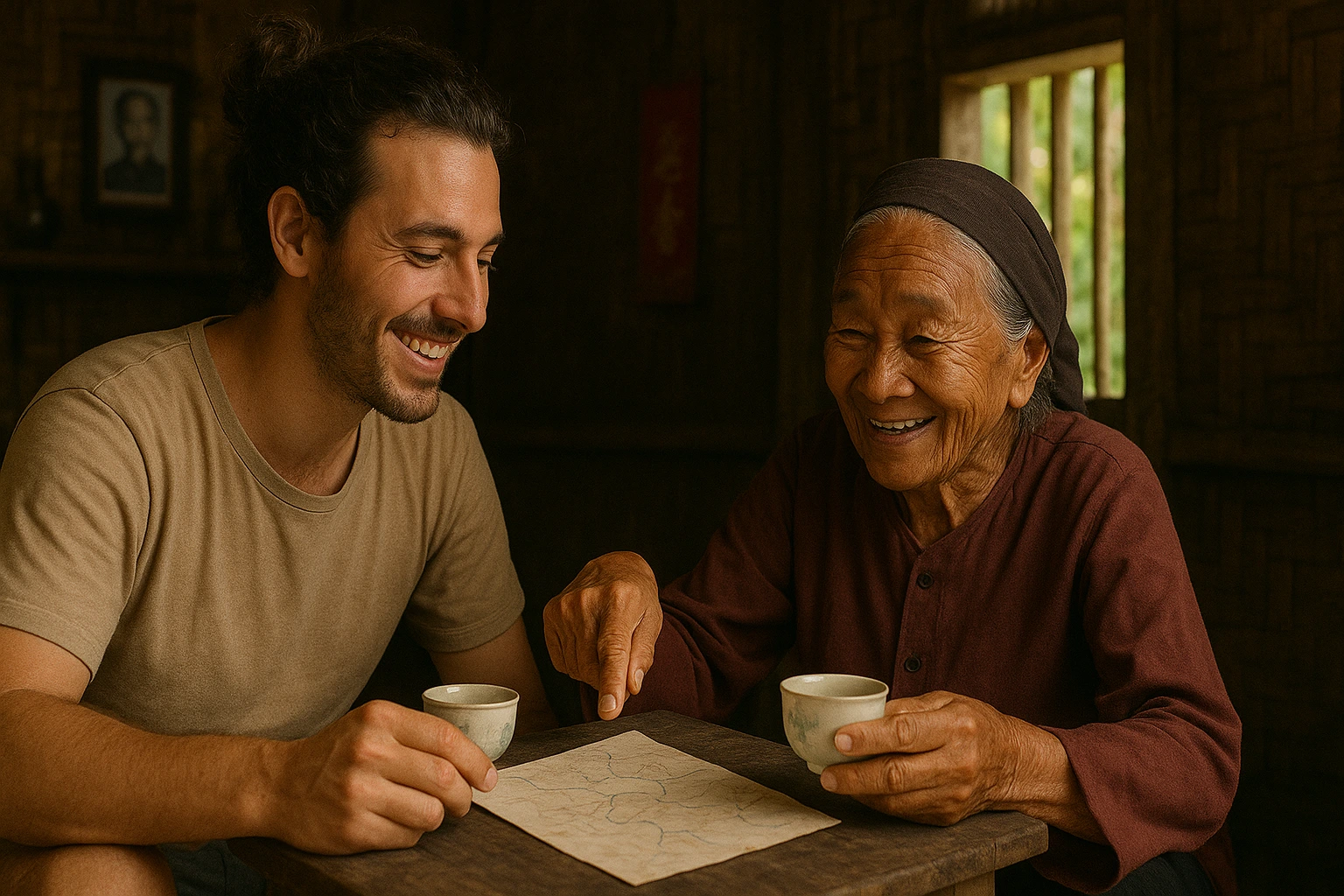
Before my first big trip to Southeast Asia, I was a bundle of nerves—doom-scrolling scary headlines at 2 a.m., convincing myself I wasn’t “brave enough.” What if I got lost? What if I got sick? But the moment I arrived, those fears started to loosen their grip. In a tiny Vietnamese village, an elderly woman saw me wandering, clearly confused. She didn’t speak English, and my Vietnamese was nonexistent, but she gestured for me to sit with her, poured me tea, and pointed me toward my hostel with a grin.
That moment taught me something simpler: fear can be loud without being the decision-maker, and kindness can appear in places I was prepared to fear.
Try this: Before your next trip, write down your biggest “what if.” On day one, write one “actually happened” moment that proves you can handle more than you think.
Lesson 2: Minimalist Living on the Road
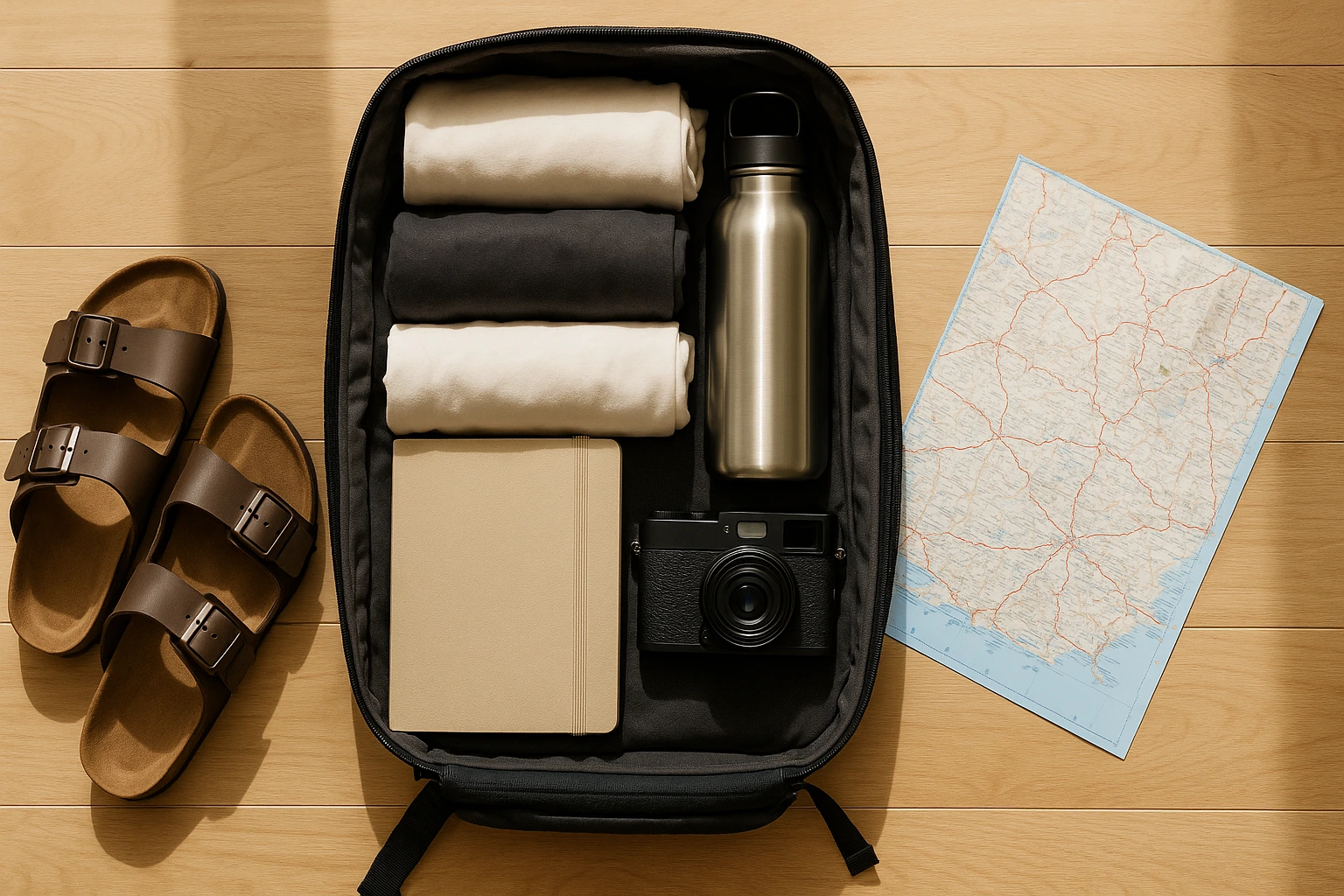
I used to think stuff equaled success—a bigger apartment, a shinier car. Then I hit the road with just a backpack, and everything changed. Carrying only what I needed forced me to notice what actually mattered. That lesson became physical once I started bikepacking: every extra gram showed up on a climb. Back home, I started choosing potlucks with friends over chasing the latest tech. Experiences started to stick with me longer than purchases, and travel made that lesson feel real.
Pack Lighter and Spend More Intentionally
Pack lighter than feels comfortable and buy what you truly need on the road. Browse secondhand for one-of-a-kind pieces, and spend more on experiences than objects. A short gratitude note at night helps you notice how little you actually need.
Quick experiment: On your next trip, skip one “just in case” item and replace it with a plan (where you’ll buy/borrow it if needed). Notice how often the plan is enough.
If you want to turn that lesson into a lighter setup, the minimalist packing list for long-term travel breaks down exactly what to bring—and what to leave.
Lesson 3: Facing Challenges with Intention
When Plans Break—and Your Mood Follows
Travel loves curveballs. I learned that the hard way in Bolivia when I missed a bus and ended up stuck in a remote village with no plan B. At first, I was annoyed—pacing, checking my phone for signal, replaying the “should’ve” loop in my head. Then I started wandering, striking up broken-Spanish conversations with locals, hearing their stories over cups of mate. That “disaster” turned into one of my favorite memories.
Bikepacking keeps bringing me back to the same choice: a smooth road can turn into gravel, a shortcut into a dead end, or a clear sky into a storm, and you have to respond in real time rather than from a distance.
What helped in Bolivia—and still helps on a difficult route—is treating the detour as an invitation rather than a failure. Say yes to one small thing, practice patience, and ask what could make the delay worthwhile. Some snags become good stories if you do not rush past them.
Try this: When a plan breaks, ask one question before you “fix” it: “What would make this detour worth it?” Then do the smallest version of that.
When you’re alone on the road and things feel uncertain, that’s when practical safety habits for solo wild camping stop being optional and start being something you’re glad you planned ahead for.
Lesson 4: Finding Connection While You Travel
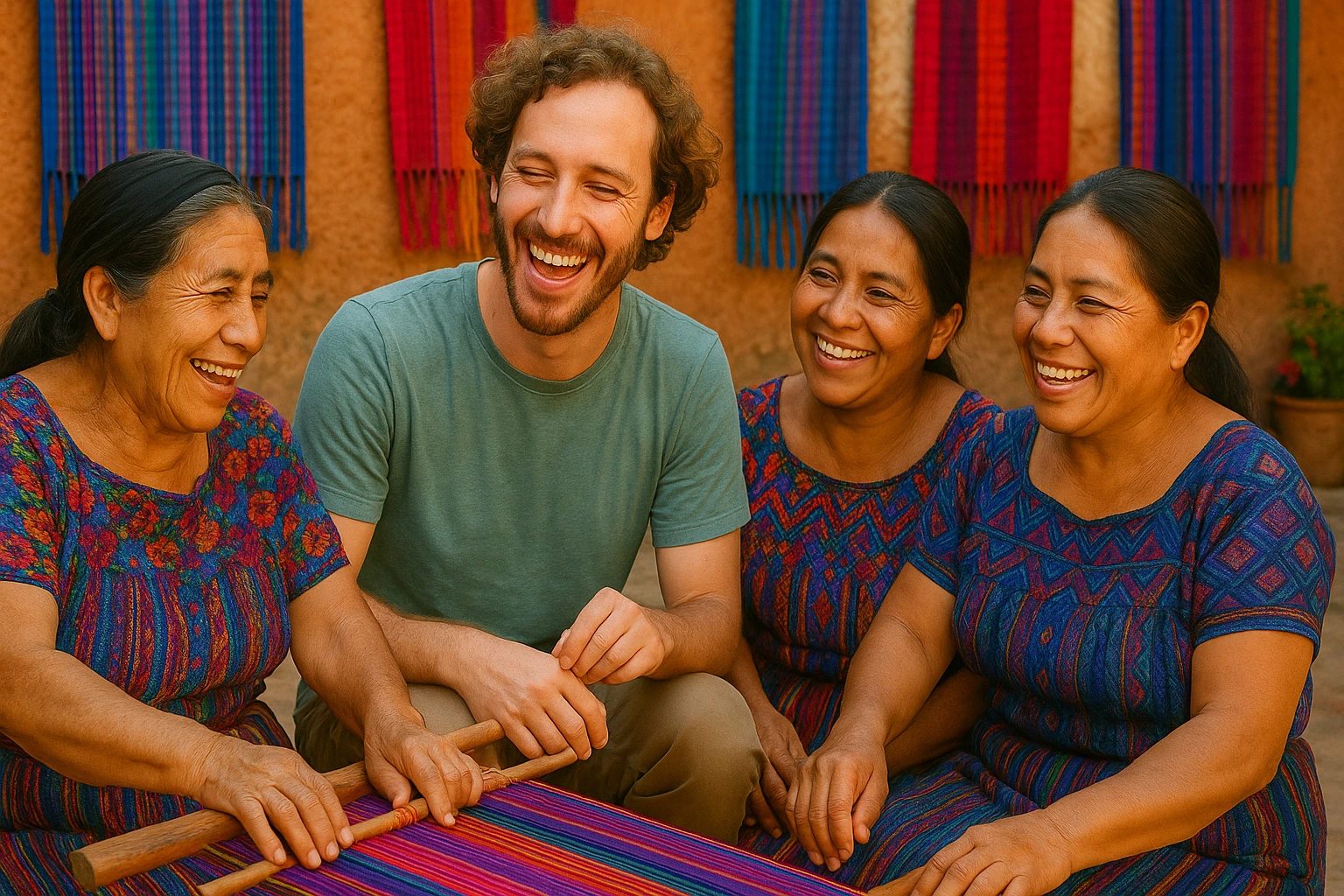
What a Weaving Lesson Taught Me About Connection
Travel can feel solo sometimes—especially on the nights you eat dinner alone and wonder if everyone else has a built-in friend group. But it’s also where I’ve found the most meaningful connections. Volunteering with indigenous women in Guatemala changed my perspective. Over shared meals and hours of weaving, their stories of strength and struggle reshaped how I see the world.
Make the First Conversation Easier
Choose places where people naturally meet—hostels, community events, and volunteer projects. Be approachable: smile, ask simple questions, and listen a beat longer than feels comfortable. That is often enough to start a real conversation.
Small shift: Use one “connector question” today: “What do you love about living here?” Then follow up with “Why that?” and let the story unfold.
Lesson 5: Resilience Lessons from the Road
What Running Out of Money Taught Me
You’ll miss a bus or two. That’s part of the deal. In South America, I ran out of money and felt embarrassed—like I’d failed at the “simple” parts of travel. Instead, I taught English online and sold crafts. That season taught me I was more resourceful than I knew.
The useful part was not the setback itself; it was noticing what helped me move again. Catch your breath, choose one adjustment for next time, and ask someone you trust for honest feedback.
That same lesson becomes immediate on a bike. Low energy, bad weather, or a long distance to the next town can turn resilience into one practical question: what adjustment helps you keep moving without ignoring what your body or mind is telling you? If the road has worn you down rather than built you up, the travel burnout recovery guide has a practical reset for exactly that.
Your turn: Keep a tiny “resilience note” on your phone: what went wrong, what you did next, what you’d do differently. Two lines each.
Lesson 6: Self-Discovery Through Travel
Travel can prompt introspection. A Thai cooking class surprised me—I realized how much I love cultural learning. Back home, I started making room for more of it. If you’ve ever come home and thought, “Wait… why do I feel different?” that’s self-awareness showing up in real time.
Keep One Reflection Habit
A tiny daily journal, a minute of mindfulness before bed, and a quick check against your values can help keep your compass set. When you’re unsure, ask for feedback from someone you trust on the road.
Try this: End the day with one sentence: “Today I learned I’m the kind of person who…” and don’t overthink it.
Long hours riding alone amplify this even more. Without constant distraction, bikepacking creates space where your thoughts catch up to you—and that’s often where the most honest self-discovery happens.
If you’re a woman traveling alone and wondering how to balance openness with caution, the solo female bikepacking safety guide covers the same kind of grounded confidence this lesson is about.
How travel changes your perspective (and how to keep it)
It can sneak up on you: you’re in a market, you misread a sign, you ask for help… and suddenly you notice how many “default assumptions” you carry at home. If you’ve ever wondered how travel changes your perspective, those small disruptions are often where the shift begins.
For me, those shifts felt more immediate on a bike, where small moments repeated day after day. The useful question is not only what changed, but what habit can carry that lesson home:
| Travel or Riding Moment | What It May Reveal | Habit to Bring Home |
|---|---|---|
| Asking for help far from a familiar place | Independence does not have to mean handling everything alone | Ask earlier instead of struggling silently |
| Carrying too much up a climb | Every “just in case” item has a real cost | Remove one unused item from your next packing list |
| Changing a route because of weather | Flexibility is part of competent planning, not a failure | Build one backup into plans that matter |
| A conversation at a stop or overnight stay | Moving slowly creates chances to meet people you might otherwise pass | Use one connector question each week |
| A hard day far from the finish | Progress often depends on adjusting before pushing harder | Keep a two-line resilience note |
| Long quiet hours moving alone | Which interests, fears, or values keep returning | Finish “Today I learned…” once a week |
Choose one row that feels familiar. The three prompts below will help you turn that lesson into something you can actually carry home.
3 Questions to Journal Tonight ✍️
One of the simplest ways to lock in the lessons from traveling with purpose: a 5-minute journal. No fancy notebook, no hour of silence. Set a timer and answer these honestly, even if the answers are messy.
- What moment felt most alive today? Write what happened, then why it hit you.
- Where did I stay in my bubble? Name the moment and what a “tiny braver” choice could’ve been.
- What do I want to bring home? One small change you’ll keep—something you can do in under 10 minutes.
Keep it small: Short on time? Answer only the first question. One honest sentence still counts.
Got Questions About Purposeful Travel?
Traveling with purpose means traveling with intention—so your trip gives you something real to bring home. Think: one value you choose before you go, one “local yes” each day, and one tiny habit or mindset you keep after. You’re not chasing perfect—just meaning.
Start small. Try a local cultural event, a neighborhood you’ve never walked, or a short volunteer day. You can also explore opportunities with a community like Workaway. The key is one simple ritual: a 2-minute note at night or one “local yes” each day.
Because it moves you from “watching” to actually meeting people. A cooking class, a market conversation, or a local festival can challenge assumptions and deepen empathy. Even one genuine exchange can make a place feel less like a backdrop—and more like a relationship.
Totally. You don’t need a plane ticket. Pick a nearby community event, a local museum, or a new neighborhood and go with one intention: curiosity, kindness, or courage. Ask one “connector question,” take one small detour, and journal one sentence after.
First, breathe—then zoom in. Ask: “What’s the smallest next step?” Hiccups are part of travel, and they don’t mean you’re doing it wrong. If you can, trade panic for one calm action: ask for help, get water, find a safe place, and reset your plan.
Take One Purposeful Habit Into Your Next Trip
Purposeful travel does not require a dramatic trip. On a long bikepacking route, purpose gives you something to return to when the scenery, motivation, or weather stops cooperating: one value to practice, one lesson to notice, and one small change to carry home. The same approach can begin on a local volunteer day or a weekend escape.
Try this on your next ride: Choose one value to practice, one “local yes,” and one lesson you want to bring home—even if the trip is only a half day.
If the mental side of a longer ride makes that purpose hard to hold onto, the mental health on long bike tours guide goes deeper into the patterns worth watching.
This article is for general information and personal reflection only, not personalized travel, medical, or legal advice. Travel conditions and personal needs vary—check official advisories and consider a qualified professional for guidance that fits your situation. What works for one traveler may not work for another.