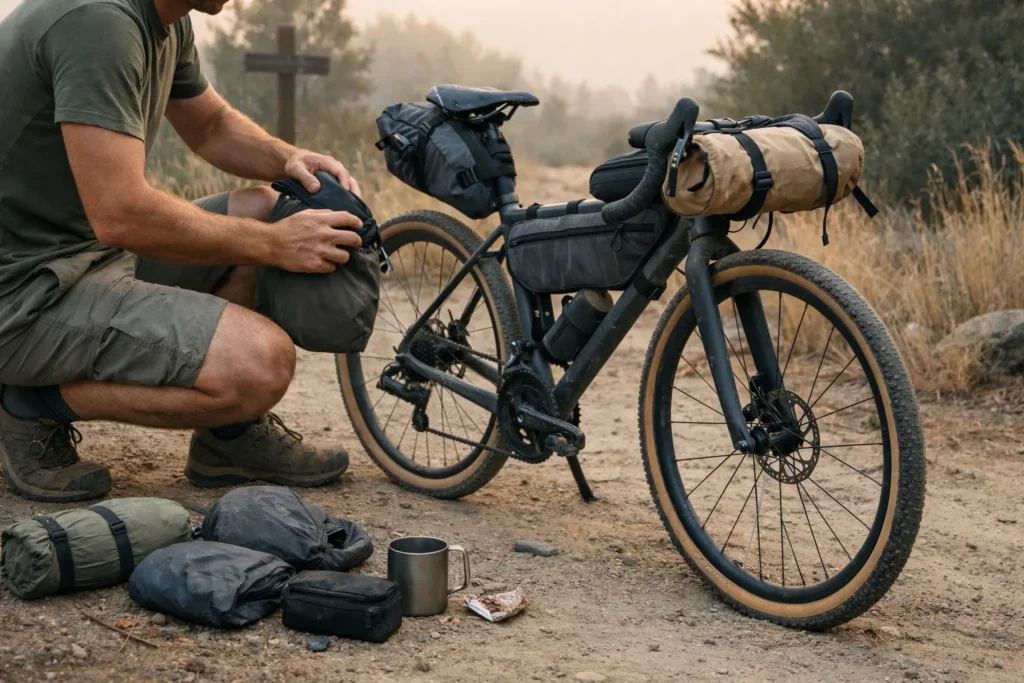
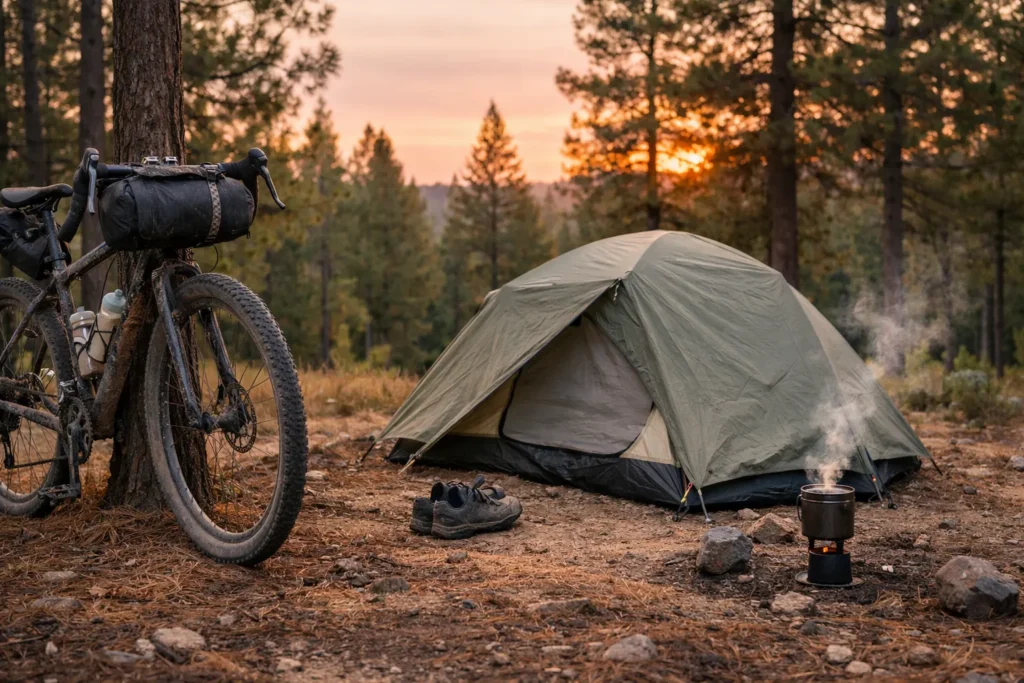
Day 23. Somewhere in rural Portugal, outside a petrol station that sold nothing I actually wanted to eat. I’d been riding since 7am, it was 4pm, and I sat on the kerb with a lukewarm Fanta and thought: I don’t want to do this anymore.

Not “I’m tired.” Not “this stretch is hard.” I mean I genuinely didn’t want to be there. Didn’t want to get back on the bike. Didn’t want to make the fourteen decisions between the kerb and wherever I’d sleep that night. I wanted to be in my flat. I wanted to watch something stupid on a laptop and not have to think about anything.
That moment scared me more than any descent or dodgy road I’d been on. Because I’d planned this trip for two years. I’d wanted this. And somewhere around week three, I’d stopped wanting it — and I had no idea if that was temporary or if something had actually broken.
That’s what nobody talks about honestly — mental health on long bike tours doesn’t announce itself as a crisis. It’s more like a slow leak. The air goes out so gradually you don’t notice until you’re sitting outside a petrol station wondering what happened to the person who was excited about this four weeks ago.
Here’s what I’ve learned about why it happens, what made it worse before I figured out what helped, and how to tell the difference between a rough patch and something that actually needs attention.
Last updated July 2026.
Table of Contents
- Why the mental side can get harder on a long tour
- The worst few days
- What didn’t help
- What actually helped
- How it changed over time
- Normal fluctuation vs something that needs attention
- Evening Tour Strain Check-In
- What I’d tell myself before leaving
- Frequently Asked Questions
- You’ll have a hard stretch. That’s not the end of the story.
This post focuses on the hard stretch itself: what can wear you down mid-tour and how to respond. For preparation before you leave, see the mental resilience on long bike tours guide.
Why the mental side can get harder on a long tour
There wasn’t one cause. There were about four, all arriving at the same time.
The first is what I came to think of as nervous system fatigue. Bike touring can become relentless low-grade stress: route, water, food, shelter, weather, traffic, body signals. After weeks of making those decisions while tired, underfed, or short on sleep, the accumulation felt real. Calling it weakness only made it harder to respond to what was actually happening.
The second is the loss of social feedback. This one surprised me. I thought of myself as reasonably introverted, fine alone, didn’t need people constantly. What I didn’t understand was how much my sense of being okay relied on small daily signals from other humans — a conversation, a joke, being recognised by someone. The CDC distinguishes social isolation from loneliness and notes that both can affect mental and physical health. On a solo tour, days can pass without anyone knowing you beyond the transaction of buying food. Without realising it, your emotional calibration can start to drift.
The third is identity. At home, you have structure — job, routine, relationships, a sense of role. On a long tour, all of that falls away simultaneously. Someone asks “so what do you do?” at a hostel and you genuinely don’t know what to say — not because the answer is complicated, but because the frame the question assumes no longer applies. You’re just a person on a bicycle, anonymous, undefined, passing through places that don’t remember you the moment you leave. For some people that’s liberation. For others — especially a few weeks in — it’s quietly destabilising in a way that’s hard to name because it doesn’t feel like sadness exactly. It feels more like looseness. Like a tooth that’s slightly loose but hasn’t fallen out.
The fourth is the gap between expectation and reality. The first week or two of a long tour often delivers exactly what you imagined: freedom, movement, landscape, that particular calm that comes from life being reduced to the essentials. Then the novelty fades. The hard riding is just hard riding. The loneliness on long tours that felt romantic in week one stops feeling romantic. And you’re left with the question: was this just the honeymoon phase wearing off, or is something wrong? (If you’re in the planning stage and haven’t left yet, the beginner bikepacking guide covers what the early days actually look like — including the emotional side.)
Usually it’s the first thing. But it doesn’t feel like it at the time.
The worst few days

The petrol station was the start of a rough stretch, not the bottom of it. The bottom came two days later.
It wasn’t one dramatic event. It was a rest day spent scrolling on a hostel bed and feeling worse for stopping. Then two hours fixing a mechanical in the heat. Four bad nights of sleep. Three days of poor food because the route offered little else. Six days without a real conversation.
Any one of those would have been manageable. Tired? Fine. Mechanical? Annoying but fine. Lonely? Manageable. Stacked together, though, bad sleep, calorie deficit, isolation, and constant decision-making stopped feeling like circumstances. They started feeling like the truth about me.
That’s the difficult thing about depression while bikepacking — or any persistent low mood on tour: it may not feel like an obvious crisis. It can feel like clarity. Like you’ve finally seen through the illusion of the trip and understood that you’re just a person who made a mistake and is now stuck with the consequences. The pessimism presents as realism. That’s what made it hard for me to spot from the inside: it didn’t feel like a distortion; it felt like I’d finally stopped lying to myself.
I called my sister that evening. I didn’t want to — I felt stupid, like I was failing — but I called her. I told her it was rough. She asked some questions, didn’t fix anything, but she laughed at one point about something unrelated and I laughed too. That tiny human moment did more than two days of rest had done. I got off the phone, ate a proper dinner, slept for nine hours, and the next morning had shifted. Not fixed. But something had.
What didn’t help
I want to be honest about this part because most articles skip it. When you’re coping with solo travel anxiety and a low mood, knowing what doesn’t help is half the picture.
Forcing positivity was the first dead end. I tried telling myself the trip was amazing and I was lucky to be doing it. Both were true. Neither touched the feeling.
I tried filling the silence too. Podcasts, music, audiobooks — fine for passing time on the bike, but they gave me company in my ears, not connection. They were volume, not solution.
Stopping wasn’t automatically rest, either. I’d assumed that a day off would reset me. Instead, I lay on a hostel bed with nothing to do except think about how I felt. A rest day needed to be different from a riding day, not merely stationary.
And pushing through had a limit. Sometimes you do ride out of a mood. But when I was actually depleted, grinding forward didn’t build resilience. It deepened the hole.
What actually helped
What helped wasn’t one breakthrough. It was lowering the load from several directions at once.
Calling someone. Not texting — calling. Voice, even for seven minutes, did something that messages didn’t. After the call with my sister, I started reaching out before I hit bottom, not only when I was already low. Every two days became my own rule.
Before your next riding day: identify one person you can call in the next 48 hours. Not when you’re already low — before.
Fixing the physical basics first. Sleep, food, water. I know that sounds obvious. But I’d been letting the physical side slide — eating convenience stuff, staying in places that weren’t restful, starting early when I was already exhausted. Once I got strict about those three things, the mental weather shifted faster than anything else I tried. If your food strategy on a multi-week tour is ad hoc, the bikepacking food and resupply guide is worth a read before you leave.
Giving the rest day actual structure. Not a plan, just anchors: a morning coffee somewhere I’d sit down properly, a walk without the bike, one task (laundry, route check), something that felt slightly social even if brief — talking to the guesthouse owner, sitting in a bar and watching football. Structure turned a rest day from a void into something my nervous system could actually use.
Writing one sentence a day. Not journaling in any serious sense. Just: what happened today, one honest thing about how I felt. It took two minutes, but it gave my brain somewhere to put things instead of cycling them on repeat.
Lowering the daily distance for a week. I’d been riding to targets. Dropping from 90km days to 60–65km days for a stretch reduced the cognitive and physical load enough that I could start recovering while still moving. It felt like giving in at the time. It wasn’t.
How it changed over time
Not linearly. That’s the honest answer.
There were good weeks after the bad patch, then another harder week around week seven — shorter, less severe, but still real. Then a long stable stretch from about week nine onward that felt genuinely different from the early tour optimism. Less euphoric, more solid. Less “I can’t believe I’m doing this,” more “I’m doing this, and I’m okay.”
The anxiety on bike tours that felt sharp and destabilising in week three became something I could see coming. I started to recognise my own warning conditions — bad sleep, more than four days of isolation, stopping in places I didn’t like — and the things that helped me recover. The dips still happened, but they stopped arriving as complete surprises.
That was the change in my solo bikepacking mental health — and in my sense of mental wellness on tour. Not permanent positivity. Not invulnerability. Just a shorter distance between noticing the slide and doing something about it: eating, sleeping, calling someone, easing the route, or asking for more support.
Normal fluctuation vs something that needs attention
This is the thing I most wished someone had told me before I left. Not every difficult day on a long tour means the same thing — and knowing roughly which tier you’re in changes what you do next.
| What you’re experiencing | What it likely is | What to do |
|---|---|---|
| A rough day or short stretch that improves after sleep, food, connection, or lighter riding | Likely trip strain rather than a diagnosis | Slow down, cover the physical basics, talk to someone, and reassess before riding on |
| Low mood, loss of interest, sleep or appetite changes, or difficulty managing normal tasks that persist, worsen, or feel distressing | Worth professional support | Pause the tour and contact a healthcare professional. Do not wait for a specific day count if you are worried or your functioning is affected. |
| Thoughts of suicide or self-harm, feeling unable to stay safe, or severe distress that makes basic decisions unsafe | Urgent help | Stop riding and get to a safe place. Contact someone you trust and local emergency services or a crisis line now. |
Do not use this table as a diagnosis or a countdown. The NIMH advises seeking professional help when severe or distressing symptoms persist, and sooner whenever you are concerned, unable to manage normal tasks, or getting worse. On tour, the practical first step is to stop making the day harder: pause, get somewhere safe, contact someone, and bring in qualified support rather than trying to prove you can push through.
Use this two-minute check-in to notice when touring strain is building. It cannot diagnose depression or tell you whether you are safe.
Evening Tour Strain Check-In
Five questions about energy, sleep, isolation, and self-talk. Use the result to choose a smaller next step, not to prove you should keep riding. Important: If you might harm yourself or cannot stay safe, skip this check-in and contact local emergency services or a crisis line now.
What I’d tell myself before leaving
I wish I’d known one thing before leaving: don’t turn a depleted afternoon into a verdict on the whole trip.
For me, the basics mattered more than any clever coping strategy: sleep, food, water, and hearing a familiar voice regularly. When I was depleted, I didn’t need inspiration. I needed to reduce the load.
I also wish I’d planned for the petrol-station moment instead of treating it as proof that something had gone wrong. The person who was excited about the trip may still be there, underneath exhaustion, loneliness, hunger, or something that deserves more support.
So I would tell myself: you do not have to decide the whole tour tonight. Fix what is fixable. Sleep. Call someone. See what the morning looks like. If the feeling persists, worsens, or makes normal tasks hard, pause and bring in professional support.
Sometimes the morning changes. When it doesn’t, asking for help is not failure. It is the next sensible step.
Frequently Asked Questions
You’ll have a hard stretch. That’s not the end of the story.
A hard stretch does not automatically mean the trip is over, but it should not be ignored. If sleep, food, connection, and a lighter schedule do not shift it — or if the symptoms worsen — stop treating it like a roadside problem and bring in qualified help. If burnout is the closer fit, the travel burnout recovery guide covers the practical reset. The goal is not invulnerability; it is knowing when the basics are enough and when they are not.
This post is written from personal experience, not medical advice, and the check-in is not a diagnostic tool. If low mood, anxiety, loss of interest, sleep or appetite changes, or difficulty managing normal tasks persist or worry you, speak with a qualified healthcare professional. If you might harm yourself or cannot stay safe, contact local emergency services or a crisis line now.