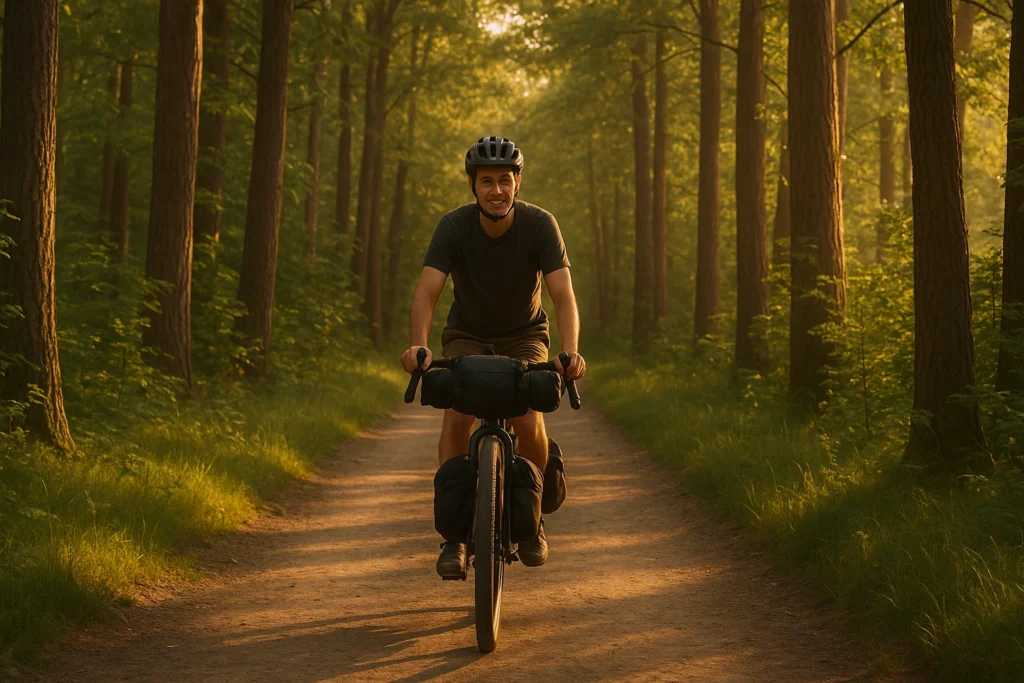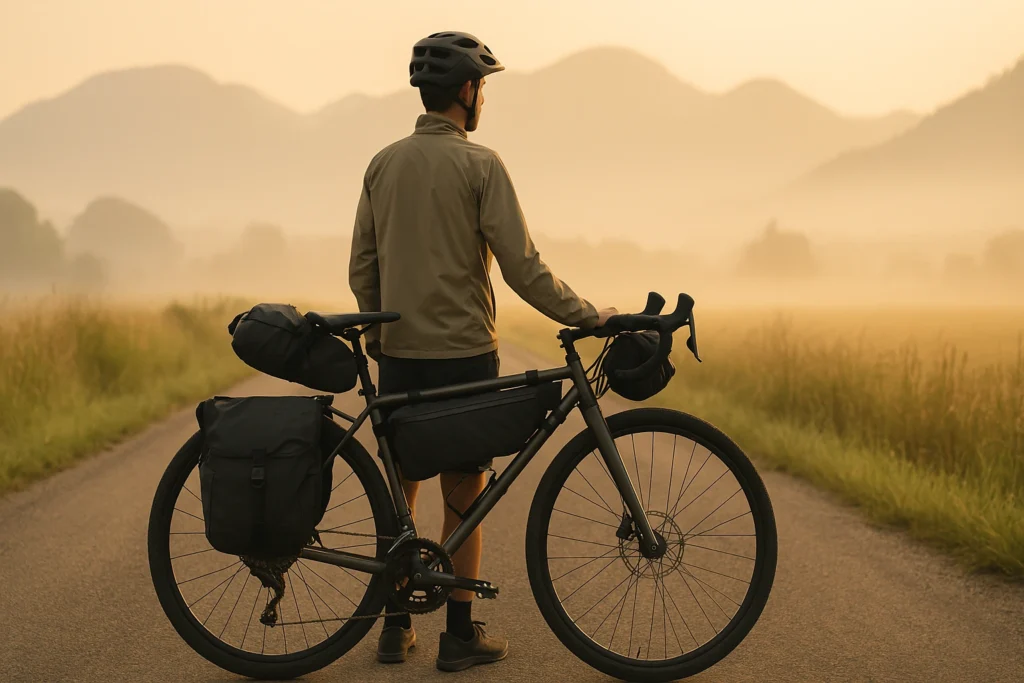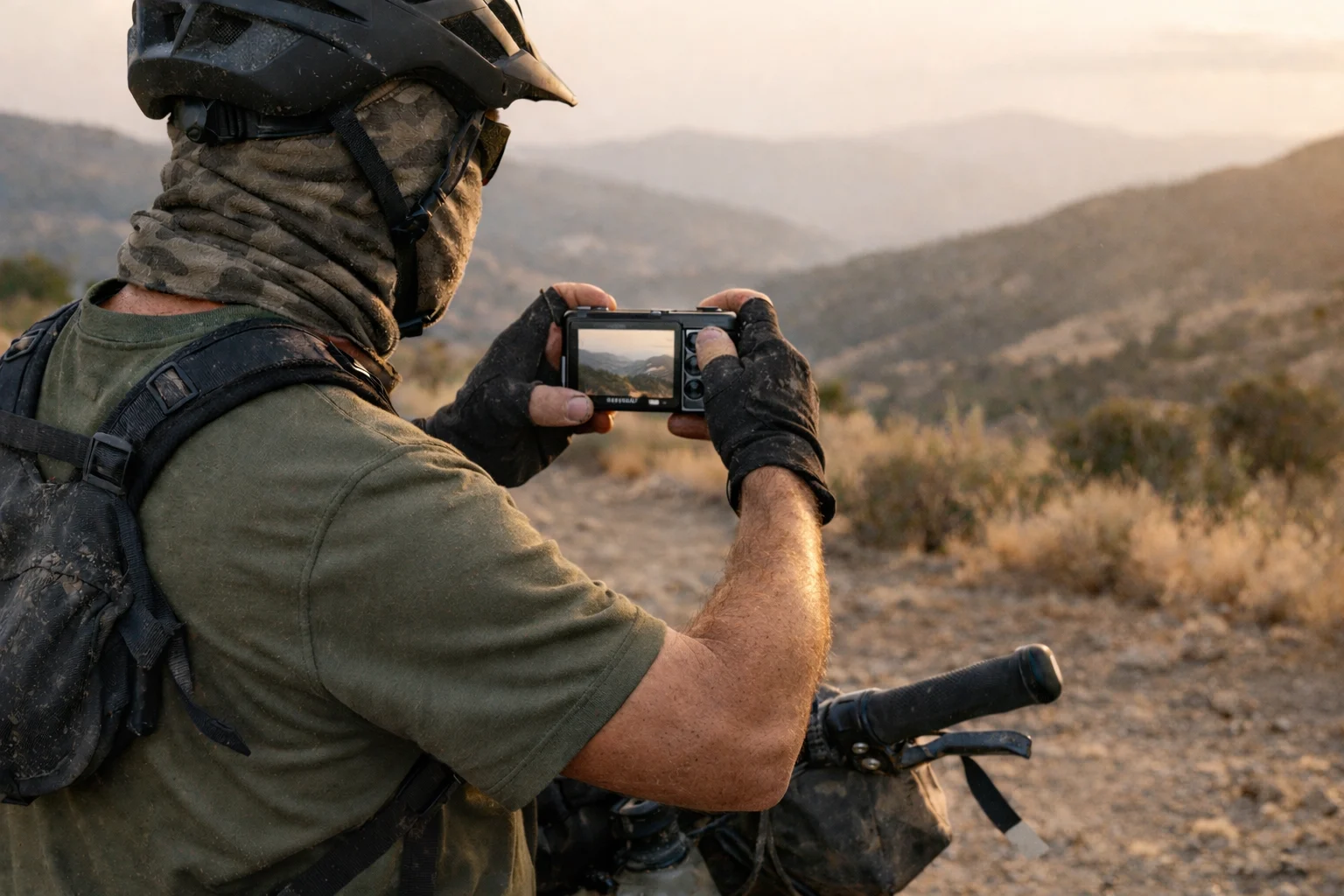
Ultralight camera kit for bikepacking is the only setup I actually use after years of hauling heavier mirrorless kits that got dusty, vibrated loose, or simply stayed in the bag because they were too fiddly. I now run a pocketable Sony RX100 VII kit that survives real trail abuse with minimal protection and delivers way-better-than-phone stills without killing your weight budget.
My rule is simple: if it’s not instant access, it won’t get used on tour. Below you’ll get the exact kit, why each piece earns its spot, protection tricks for crashes/rain, a simple power strategy, and cleaner alternatives if you want cheaper, tougher, or “bigger files.”
For the full setup (bags, sleep, cooking, repair kit), see our bikepacking gear guide.
This page contains affiliate links and may include sponsored content. As an Amazon Associate, I earn from qualifying purchases at no extra cost to you. Amazon links are labeled #ad; other affiliate links may be marked as “affiliate link,” “Sponsored,” or “(paid link).” Learn more.
Find Your Ultralight Camera Kit
Answer 4 quick questions → get your ideal setup + carry tips.
Your Kit Recommendation
Core items
Nice-to-haves
Carry + key rule
Next steps
Table of Contents
- Ultralight Camera Kit Finder Quiz
- Key Takeaways
- My Current Bikepacking Camera Kit (Real Miles Tested)
- Why These Specific Choices Work for Bikepacking
- If You Crash or Rain Hits: What Actually Survives
- Budget Alternatives for Your Ultralight Camera Kit
- Trail Shooting & Power Tricks (When You’re Tired)
- Maintenance and Care on the Trail
- Real-World Performance: What This Kit Actually Delivers
- FAQ
- Quick Recap + How to Build Yours
- Conclusion
Key Takeaways: Ultralight Camera Kit for Bikepacking
Here’s the quick version—what matters most when you’re carrying a camera on rough trails.
- Full stills carry system: ~1 lb 2 oz (camera + case + batteries + card)
- With optional video: ~1 lb 10 oz–1 lb 14 oz (depends on mounts/batteries)
- Pocket/jersey access + versatile zoom = you actually shoot more than with heavier kits
- Simple protection + spare batteries beat complicated systems on multi-day tours
- Choose a tier that matches your sharing style (social vs prints)
My Current Bikepacking Camera Kit (Real Miles Tested)
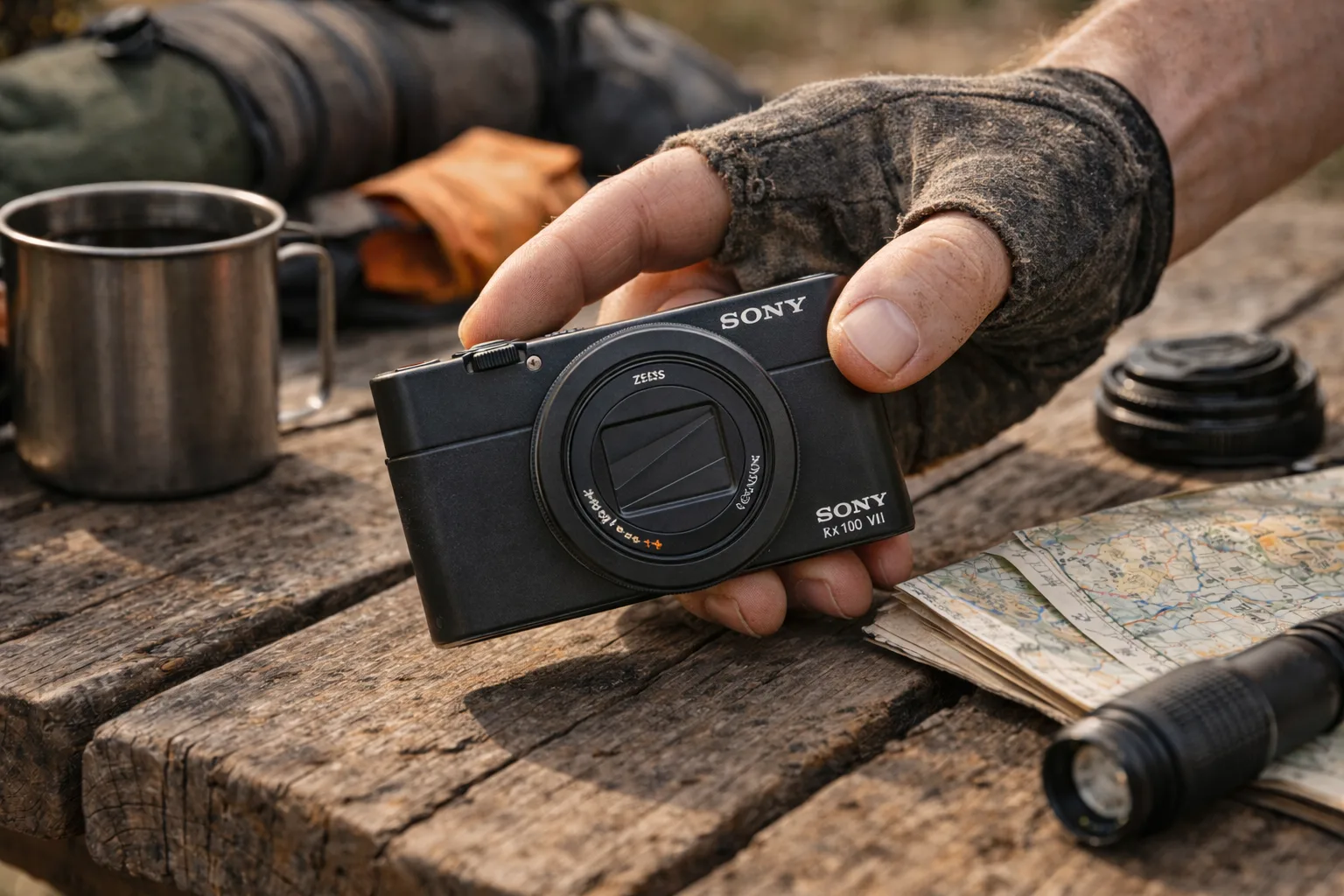
Here’s exactly what’s in my camera kit right now. This bikepacking camera setup has survived real gravel, singletrack, rain, and the occasional crash.
Quick note: If you already own something similar, don’t rebuy—match the spec (fast card, 1–2 spares, simple case) and move on.
| Item | Weight | Why It Made the Cut | Amazon Link |
|---|---|---|---|
| Sony RX100 VII (Camera) — Bundle w/ Shooting Grip | ~375g (camera + grip) | Pocketable 24–200mm zoom that actually gets used on tour. The grip adds stability plus a mini-tripod for quick camp shots. | If the bundle is overpriced, grab camera-only—the grip is optional. |
| Lacdo Protective Case | ~80g | Real protection without killing access—dust/light rain, bumps, and quick in/out. Fits well in a jersey pocket, stem bag, or hip pack. | |
| SanDisk Extreme SDXC Card (fast, reliable) Default rule: 128GB for photos-first/short clips; 256GB for any 4K or multi-day peace of mind (less offloading). |
Negligible | Reliable U3/V30 speed so 4K and bursts don’t choke. Bigger capacity reduces offloading stress on multi-day routes. | |
| Sony NP-BX1 Spare Batteries | ~25g each | Spare batteries keep you shooting when you’re tired/cold and don’t want to babysit a cable. Weekend: 1 spare. Multi-day: 2 spares. | Budget alternative below. |
Storage rule recap: Photos-first with occasional offload → 128GB is plenty. Any 4K video or multi-week tours → 256GB (the default I carry).
Situational weather insurance (~100g): 5L roll-top dry bag on Amazon for heavy storms or river crossings.
Budget battery option: Newmowa 3-pack + charger works well as backup (official Sony is still most reliable).
Total stills-only weight: ~1 lb 2 oz. Quick trim test: if you wouldn’t use an item twice on a weekend overnighter, it doesn’t belong in an ultralight kit.
Optional Add-On: Hands-Free Ride Video
If you want POV trail clips, descents, or time-lapses without pulling out the RX100, add the DJI Osmo Action 6 Essential Combo. It complements the stills camera perfectly—mount it and forget it. Skip this add-on if you won’t actually edit footage, you mainly want stills, or your routes are so rough that mounts become another thing to babysit.
| Item | Weight | Why It Fits | Amazon Link |
|---|---|---|---|
| DJI Osmo Action 6 Essential Combo | ~149g | Great “set-and-forget” ride footage. Magnetic quick-release makes it fast to reposition without fuss. | |
| SanDisk Extreme microSD Card Same rule: 128GB photos-first/short clips; 256GB for 4K or multi-day. |
Negligible | Video eats space fast. A known-good card prevents stutters and corrupted clips. | |
| DJI Osmo Action Handlebar Mount | ~94g | Stable forward view and quick angle tweaks. Official mount = least drama and fewer mid-ride adjustments. |
Mount reality check: Before big descents, do a 5-second check (tight + confirm angle). For multi-week filming, consider a tiny spare screw/adhesive—mount failures are the most common video issue.
Total with video add-on: ~1 lb 10 oz–1 lb 14 oz. Skip if you’re gram-obsessed or only want stills.
Why These Specific Choices Work for Bikepacking
The RX100 VII is the ultralight sweet spot: dramatically lighter and more pocketable than Fuji X100VI or mirrorless, with a versatile 24–200mm zoom that covers landscapes, riders, and distant details without swapping lenses. The shooting grip kit adds handheld stability and a mini-tripod bonus, while the Lacdo case gives quick zip access plus real protection from dust/light rain.
Power note: The RX100 can charge over USB, but on long remote days I still prefer 1–2 spare batteries—swapping a fresh one is faster than babysitting a cable when you’re tired or cold.
The optional DJI Osmo Action 6 is best for hands-free ride footage and rough-weather simplicity—mount it and roll when you don’t want to stop for POV clips.
If You Crash or Rain Hits: What Actually Survives
The Durability Reality Check
Compact cameras like the RX100 aren’t fully rugged, but with smart habits they handle bikepacking stresses well: vibration, drops, weather.
Crash Protection Strategy
Pocket/jersey carry reduces exposure vs chest clips. The Lacdo case absorbs minor bumps. For rough sections: stow in case immediately.
Protection hierarchy:
- Quick pocket access minimizes handling drops
- Lacdo case absorbs shocks/light moisture
- Ziplock backup for pouring rain
- Roll-top dry bag for heavy rain/river crossings
- Two-hands-on-bars rule on technical descents
Weather Protection That Actually Works
The Lacdo case handles light rain/dust fine. For heavier weather: case closed + ziplock.
My weather protocol:
- Light rain: shoot normally (lens retracts fast)
- Heavy rain/dust: case sealed immediately
- River crossings: everything in a small roll-top
Budget Alternatives for Your Ultralight Camera Kit
Not everyone needs the RX100’s zoom/sensor. Here are realistic tiers for lightweight camera gear cycling that still plays nice with real miles and tired brains.
| Tier | Typical Carry Weight | Best For |
|---|---|---|
| Phone-first | ~0.5 lb | Fast sharing + zero extra kit |
| Action cam primary | ~0.8 lb | Hands-free ride clips |
| Rugged compact | ~1.0 lb | Crash/rain “no-worry” |
| Premium compact | ~1.2 lb | Best stills without bulk |
| Mirrorless | ~2.0 lb+ | Prints/clients over convenience |
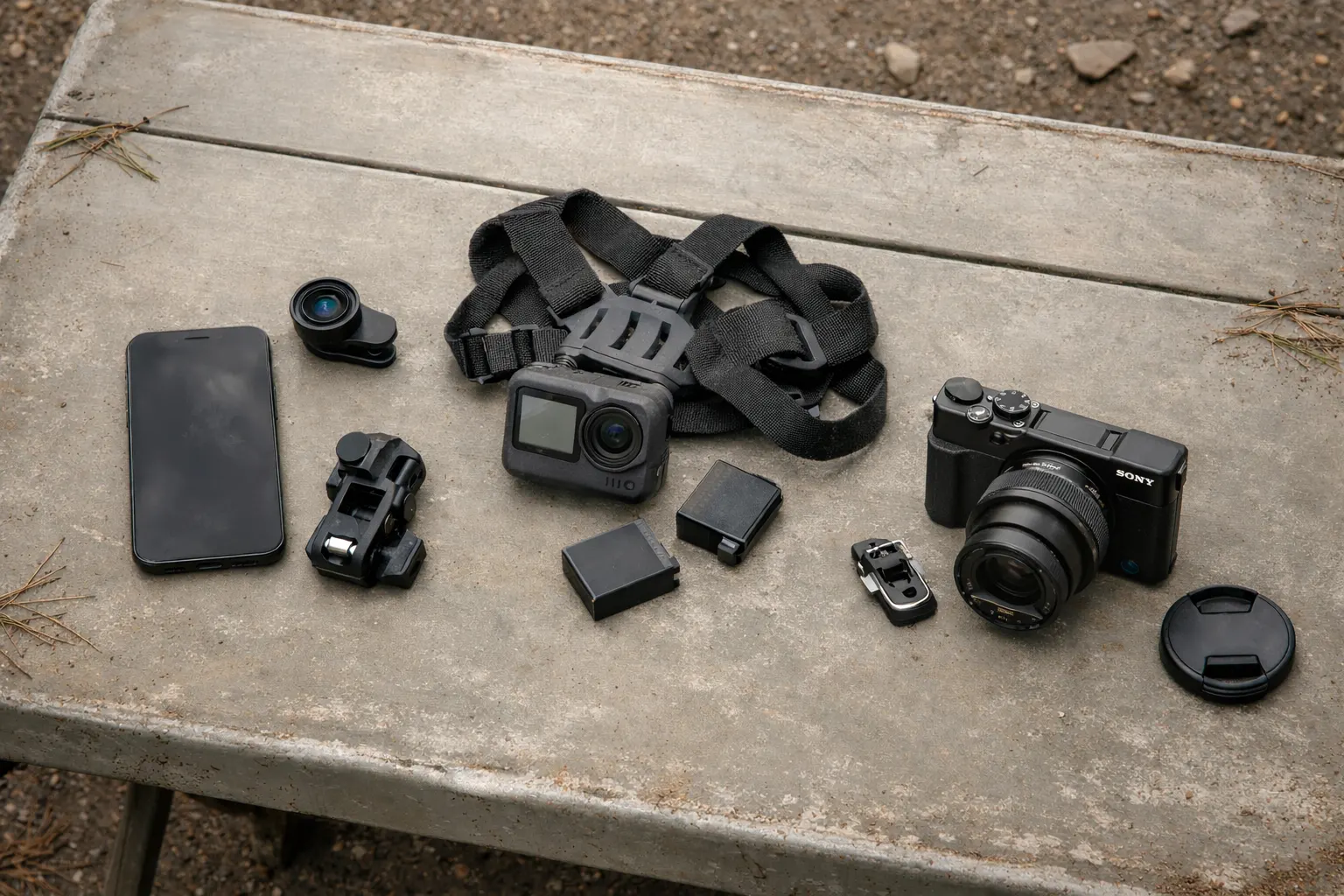
Budget Option 1: Smartphone Primary (~$0–300)
Use what you already have. The biggest upgrade isn’t a gadget—it’s a repeatable “grab-and-shoot” workflow.
- Carry: jersey pocket on smooth routes; top-tube bag or hip pack for rough terrain (one-handed grab).
- Protection: a real case matters more than a lens add-on (drops happen at stops).
- Stability: shoot short bursts (2–3 frames) and pick the sharp one later—vibration is real.
- Power: keep your phone topped up; camera time dies when you’re rationing battery for maps.
- Skip: cheap clip-on zoom lenses (soft corners, fiddly); you’ll use them twice and quit.
Budget Option 2: Rugged Tough Compact (~$400–500)
OM System TG-7 or similar: the “no-worry” option when crashes, rain, and grit are part of your normal week.
- Why it works: waterproof/shockproof means you stop thinking about gear and start shooting again.
- Carry: hip pack or top-tube bag to keep it stable; avoid loose jersey bounce on rough singletrack.
- Best use: action-at-stops, creek crossings, wet camps, gritty conditions.
- Trade-off: less zoom and weaker low-light than RX100—accept it and enjoy the toughness.
- One habit: strap it to your wrist at stops (highest “saved camera per gram” move).
Budget Option 3: Action Camera Primary (~$200–400)
If your priority is POV trail clips, descents, and “I was there” footage, an action cam is the simplest win.
- Carry: mounted (bars/chest/helmet). If it lives in a bag, you won’t use it.
- Best mount: chest for stability; bars for quick “set and forget.”
- Workflow: record short clips (10–30 seconds). Long clips become “I’ll edit later” guilt.
- Stills: use your phone for photos; action-cam stills are fine but rarely “print-worthy.”
- Common failure: mounts. Do the 5-second check before rough descents.
Premium Option: Fuji X100VI or Mirrorless (~$2,000+)
Step up only if prints, paid work, or deep editing headroom matter more than pocket access. The trade-off is simple: heavier carry, more protection, and you’ll stop less to shoot if it’s annoying to access.
| Premium Tier | Why You’d Choose It | What You Give Up |
|---|---|---|
| Fuji X100VI | Great files/colors in a simpler “one-camera” setup (no lens swaps). | Not pocketable; still needs protection; fixed lens limits zoom flexibility. |
| Compact mirrorless (e.g., Sony a7C line + one lens) | Best overall file quality for prints/clients and low light. | Heavier/bulkier carry, more “fiddly” access, and higher crash/anxiety cost. |
Simple decision: Choose your tier by one thing—do you care more about prints, or about never worrying when you crash?
Trail Shooting & Power Tricks (When You’re Tired)
Weight Distribution Strategy
Pocket access changes everything—stop for 20 seconds, shoot, keep rolling. No digging through bags.
My current distribution:
- Camera: jersey pocket or quick hip pack
- Case + spares: stem/feed bag
- Action cam (if carried): handlebar mount
Shooting Techniques for Moving Platforms
Use the zoom for compressed ridgelines or distant riders. Burst mode beats vibration. Higher ISO tolerance—perfect light is rare.
Power Management on Extended Trips
Battery life is the real constraint on remote days. I carry 1–2 spares for reliability, then top up over USB when it’s convenient (cafes, towns, lunch stops, camp power bank). Cable charging works—spares just keep you moving when you’re smoked.
My power strategy:
- Shoot in bursts instead of leaving camera awake
- Turn off WiFi/Bluetooth unless transferring
- Carry spares for multi-day stretches
- Top up via USB when you’re already charging your phone
My go-to power bank for remote stretches:
If you’re doing long stretches without resupply, this tiny 10,000 mAh bank is the difference between “I stopped shooting” and “I kept rolling.” Light enough for jersey pocket/stem bag and perfect for topping up phone + camera batteries.
Quick power habit (worth it on day five): Put a sticky note in your kit: “WiFi off. Shoot bursts.” Sounds silly—until you’re smoked.
Optional Headlamp for Low-Light Camp Tasks
If you’re shooting sunrise/sunset or handling camp chores in the dark, a simple headlamp makes the camera workflow much easier. Basic reliable choice: Nitecore NU20 Classic headlamp (light and simple). Ultralight upgrade: Nitecore NU25 MCT UL headlamp (brighter beam, better tint, rechargeable).
Composition Shortcuts for Tired Photographers
When you’re smoked, keep a few “no-brainer” compositions:
- Bike in foreground with landscape behind
- Leading lines from trail
- Rule of thirds horizon
- Silhouettes at sunrise/sunset
- Detail shots of food, gear, camp
Maintenance and Care on the Trail
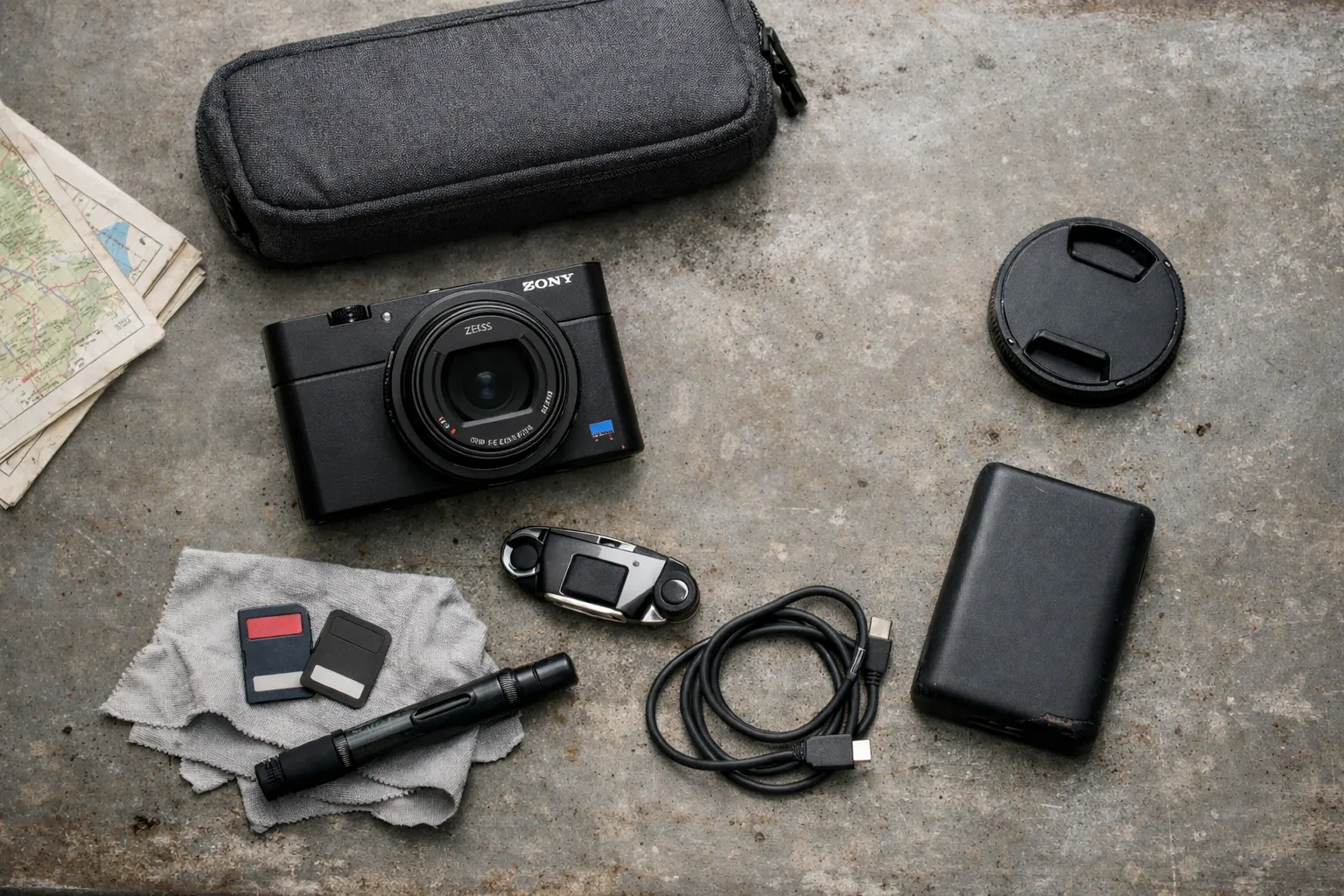
This is the full stills kit laid out—everything in the kit list above matches what you see here.
Daily Maintenance Routine
Simple habits prevent issues:
- Morning: wipe lens, check for condensation
- During rides: keep grit off extending barrel
- Evening: clean, top up batteries, stow consistently
Emergency Repairs and Workarounds
Carry minimal supplies (~1 oz):
- Gaffer tape for quick fixes
- Spare battery (always)
- Lens cloth
- Ziplock for surprise storms
Optional but worth it (tiny weight, big payoff):
- Wrist strap/lanyard: the best “grams-to-saved-camera” ratio—prevents drops at stops.
- Spare SD card: cards get lost or corrupted; a backup weighs nothing.
- Silica gel packet: helps with condensation on cold mornings.
- Action cam mount spare (if filming): one tiny spare screw/adhesive can save the whole video plan.
When to Sacrifice the Shot
Reference your two-hands-on-bars rule in these conditions:
- Technical descents needing both hands
- Severe weather threatening gear
- Exhaustion affecting judgment
- Group moments needing full attention
Real-World Performance: What This Kit Actually Delivers
Image Quality Results
Sharp, vibrant files that crush phone quality—great low-light for camps, versatile zoom for varied shots—all while staying truly pocketable.
What the Files Look Like on Tour
Real trail dust, real light, enough detail to edit without falling apart.
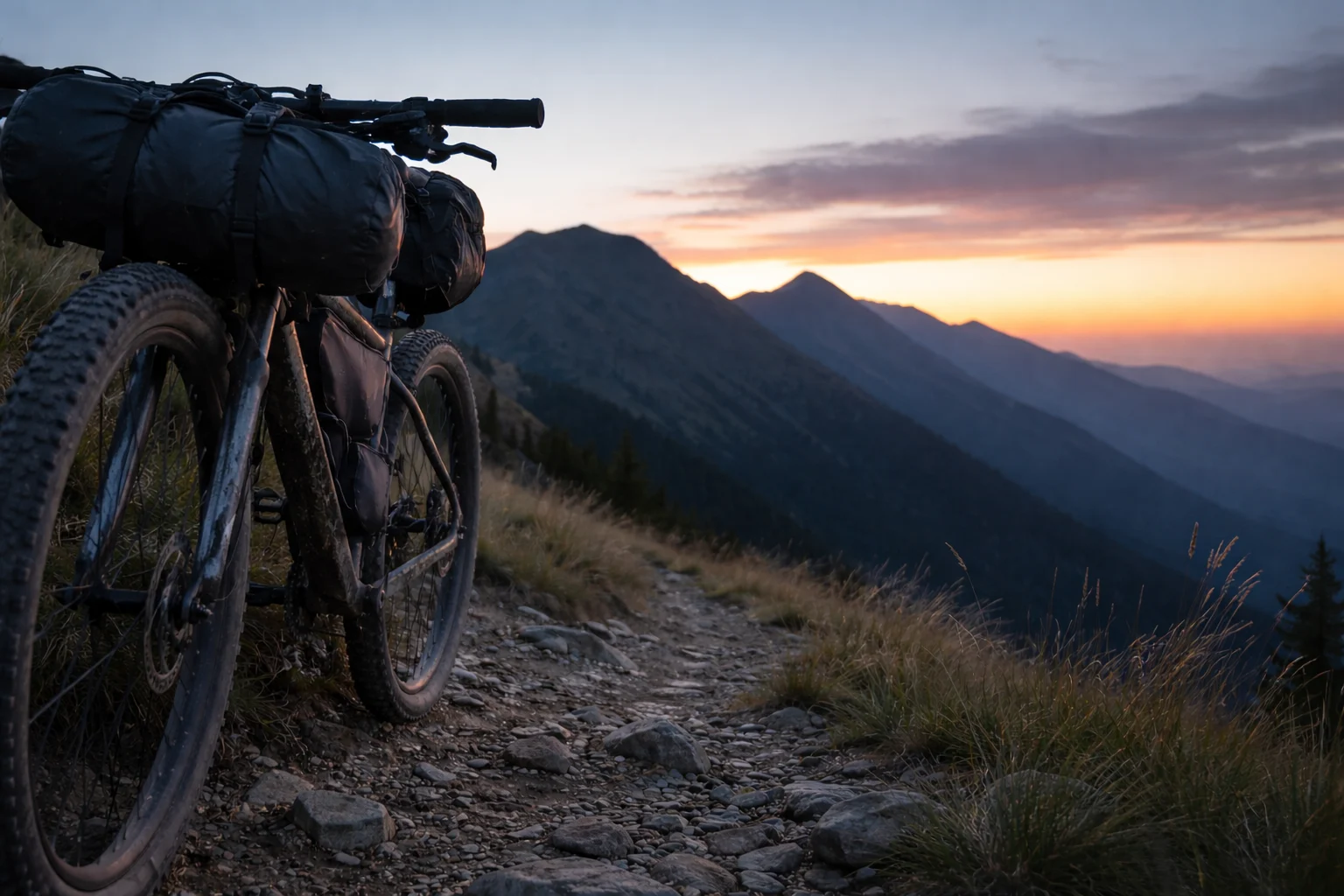
Weight vs. Quality Trade-offs
This is the sweet spot: strong files without “why did I bring this?” regret on climbs.
Trade-offs I accept:
- No lens swaps (zoom covers 90%)
- Spare batteries so I don’t rely on cable charging
- Minimal accessories (less fiddling)
Lessons from Long-Distance Testing
Fewer failure points, faster access, and simple protection win on tour.
FAQ
Prioritize pocket carry + a good case. The RX100 survives minor bumps well; for zero worry, drop to a rugged tough compact like TG-7.
Pocket/jersey = fastest access for spontaneous shots. Hip/stem bag with quick case = safer on rough sections. Test both.
For many, yes—especially social sharing. Step up to RX100 when you want better low-light, zoom, or editing headroom.
Keep it in the Lacdo case when not shooting, wipe grit off barrel/seals, commit to a “rain rule.” Most failures come from small lapses.
Quick Recap + How to Build Yours
This ultralight compact kit has evolved through real testing. Stills-only: ~1 lb 2 oz. With video: ~1 lb 10 oz–1 lb 14 oz.
If you want one proven blueprint, start with the ultralight camera kit for bikepacking above (RX100 + simple case + 1–2 spares), then add video only if you’ll actually use it.
Final Kit Summary
| Category | Item | Weight | Essential? |
|---|---|---|---|
| Camera |
Sony RX100 VII — Bundle w/ Grip Note: If the bundle is overpriced, grab camera-only—the grip is optional. |
~375g | Yes |
| Protection |
Lacdo Case (RX100 Fit) |
~80g | Yes |
| Storage |
SanDisk Extreme 256GB SDXC (for RX100) SanDisk Extreme 256GB microSD (for Action Cam) 128GB minimum guidance → see storage rule in main kit section. |
Negligible | Yes |
| Power |
Sony NP-BX1 (Official Spare) Budget backup: Newmowa 3-pack + charger |
~25–50g | Yes |
| Weather backup |
5L Roll-Top Dry Bag Storms/river crossings only. |
~100g | Situational |
| Optional Video |
DJI Osmo Action 6 (Essential Combo) DJI Handlebar Mount (Official) |
~243g | No |
| Total (stills) | Jump to full kit details | ~1 lb 2 oz | — |
Your Next Steps
- Assess your current setup — what’s working, what’s annoying, what’s too heavy?
- Choose your tier — phone, compact, action, or premium?
- Test before you travel — one local overnighter beats forum reading
- Protect the failure point — power and weather kill more trips than specs
- Practice your workflow — speed matters more than fancy settings on tour
- Test one upgrade on a local ride before your big trip.
The goal isn’t the lightest possible kit—it’s the most effective for your routes and tired brain. Start simple, test real-world, upgrade what actually limits you.
For more systems, check our gear hub.
Conclusion
After enough miles (and a few expensive lessons), I learned this: the best bikepacking camera is the one you’ll actually pull out. Pick your tier. Prioritize instant access. Set your rain rule. Then go ride. If you come home with photos you love and gear that survived, you nailed it.
This guide is general education, not personalized gear or safety advice. Conditions, budgets, and risk tolerance vary. Test your setup before big trips.