You’re 20 miles from the next town, the wind’s picking up, and you just want to sleep. This real-world shortcut breaks down tent vs bivy vs tarp bikepacking so you can pick a shelter you’ll actually enjoy using.
Most bikepacking shelter options come down to three things: bugs, storm risk, and how much comfort you need to feel human the next morning. For the bigger packing picture, see the bikepacking gear guide.
Quick answer: If bugs or storms are your main worry, start with a tent. If you want the smallest/fastest setup and can manage condensation, go bivy. If you want ventilation and versatility (and will practice pitches), choose a tarp.
- Tent: easiest, most forgiving (bugs + storms)
- Bivy: smallest/fastest (watch humidity + bugs)
- Tarp: best ventilation/versatility (needs pitch skill + bug plan)
Bikepacking Shelter Match Tool: Tent vs Bivy vs Tarp
Pick your conditions for a fast default. This tool is a shortcut—scroll down for the “why,” hybrid setups, and the picks.
Tip: Start with bugs + weather. Comfort is the tie-breaker.
Choose all three options to see your result.
This page contains affiliate links and may include sponsored content. As an Amazon Associate, I earn from qualifying purchases at no extra cost to you. Amazon links are labeled #ad; other affiliate links may be marked as “affiliate link,” “Sponsored,” or “(paid link).” Learn more.
Table of Contents
- Shelter decision factors (what matters most)
- Shelter match tool (fast recommendation)
- How Each Shelter Packs on a Bike (And Why It Matters)
- Why Bikepackers Actually Hate Their Shelters: Condensation, Bugs, and Storm Pitches
- Direct tent vs bivy vs tarp comparison (for bikepacking)
- Hybrid Shelter Setups (Often the Best Answer)
- My Real-World Experience with Each Shelter Type
- My Top Picks for Each Shelter Type: Best-for-Most vs Budget
- Essential Setup and Teardown Tips for Bikepacking Shelters
- Advanced Considerations for Shelter Selection
- Frequently Asked Questions
- Conclusion: Matching your tent vs bivy vs tarp bikepacking choice to your style
Bikepacking shelter options: decision factors that matter
It’s late, your legs are cooked, and you’re leaning your bike against whatever’s nearby while you do the camp math. Your shelter choice affects bike handling, camp speed, and how well you recover.
Weight and Pack Size
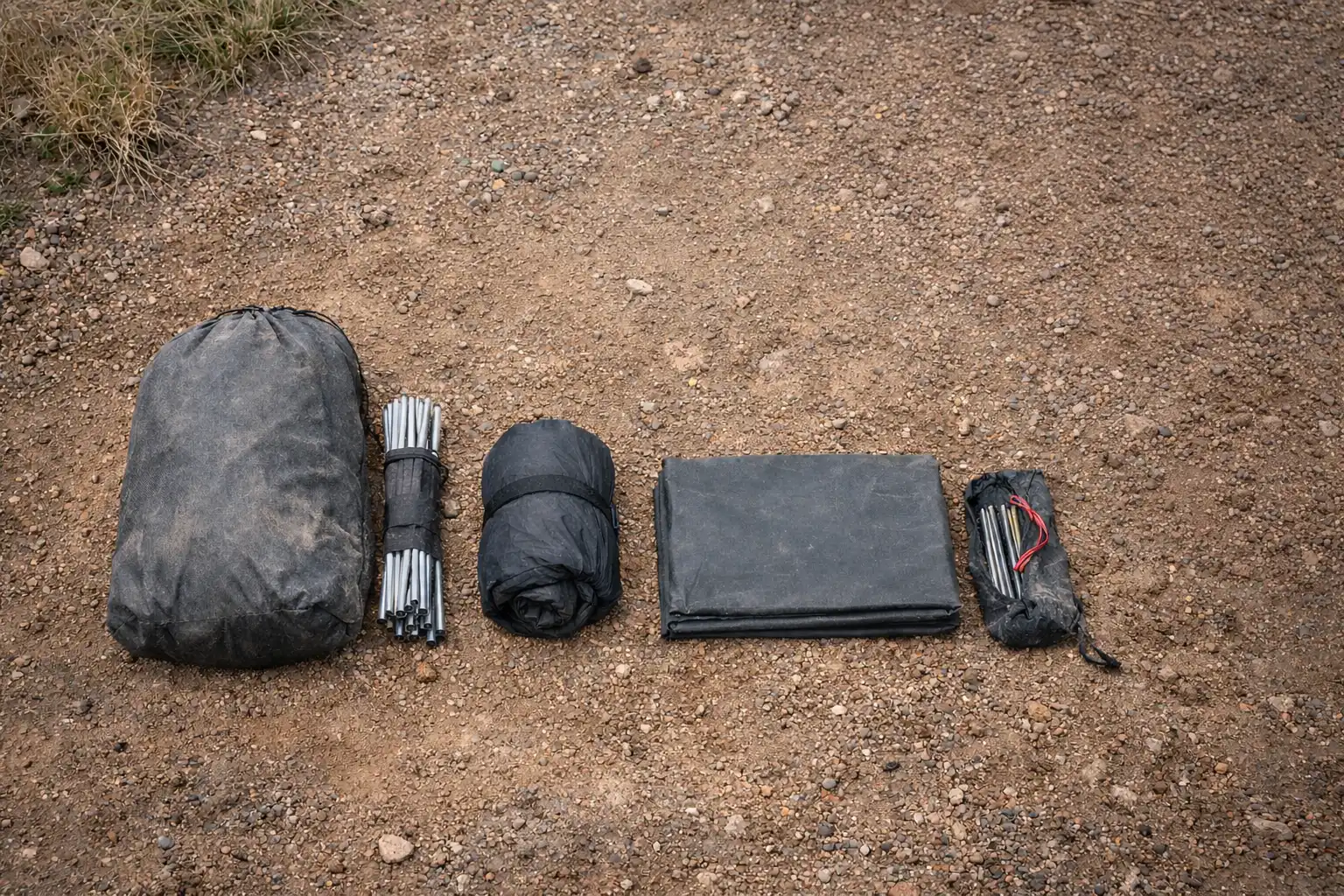
Bikepacking demands efficiency. Your shelter has to fit your bags and keep total weight manageable for climbing and handling.
- Bivies: 8–16 oz, compresses to softball size
- Tarps: 6–12 oz, packs flat in a frame bag
- Tents: 1.5–3 lbs, usually needs dedicated space
Pole length, stakes, and “bikepacking reality”
One overlooked detail: pole segment length. Some backpacking tents have long pole sections that fight handlebar rolls and frame bags. If you camp on hard ground often, the stake plan matters too—a couple stronger stakes can save a windy night. Tarps can sometimes use your bike as an anchor point (avoid stressing carbon parts), but only if you’re confident you won’t stress components.
Weather Protection Needs
You don’t need perfection—you need enough protection for your usual conditions. The more tired you expect to be at camp, the more “forgiving” your shelter should be.
- Storm season priorities: wind stability, reliable coverage, fast setup
- Fair-weather priorities: ventilation, bug plan, flexible pitching
Comfort vs. Minimalism Trade-offs
This is where preference beats specs. Some riders sleep great in minimal setups. Others need a little space to feel calm, warm, and organized before sleep.
How Each Shelter Packs on a Bike (And Why It Matters)
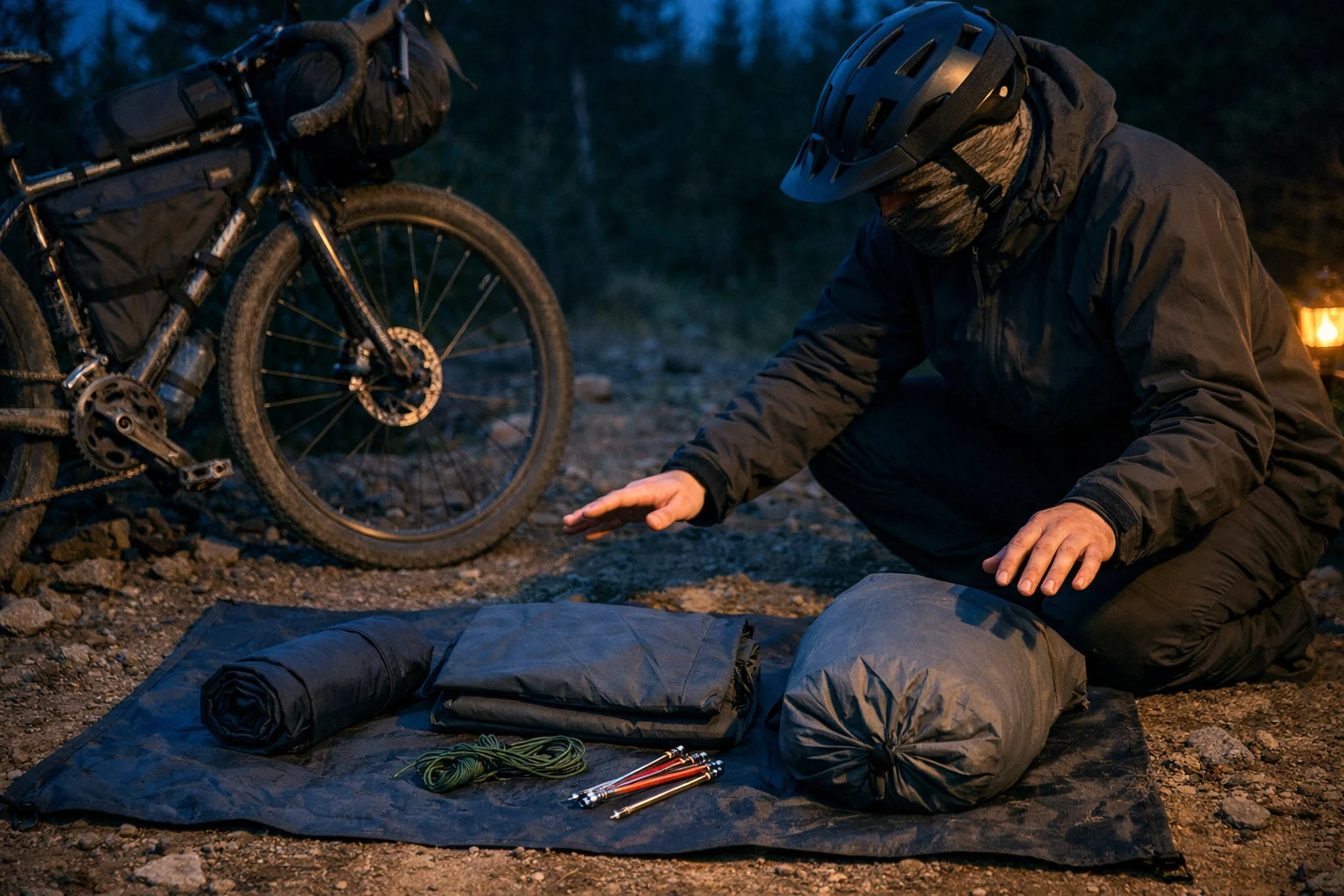
If you’ve ever stuffed wet fabric into a seat pack while your hands are cold, you already know: packing is part of the shelter choice.
- Tents: ride best split up—poles along the frame/fork, fabric in a seat pack or handlebar roll (steadier handling).
- Bivies: the easiest “wherever it fits” item—frame bag, top tube bag, even a small fork cage.
- Tarps: pack flat and disappear in a frame bag—just keep stakes + cord together as one kit.
Do this once at home: Pack your shelter as a system (poles separate, fabric separate, stakes/cord in one pouch). Take a 10-minute ride and fix anything that rattles or makes the bike feel “waggy.”
Why Bikepackers Actually Hate Their Shelters: Condensation, Bugs, and Storm Pitches
Most shelter regret comes from three things: condensation, bugs, and storm pitches. When one fails, you don’t just sleep badly—you start the next day behind.
The Condensation Problem
You wake up and your quilt feels slightly clammy. It’s not “soaked,” but it’s enough to make you wonder if tonight will be worse. That’s condensation: normal moisture, but the wrong shelter makes it feel personal.
- Bivies are hardest in humidity (condensation management matters).
- Tarps vent well, but ground moisture + splash still matter.
Bug Protection Failures
Nothing ends a trip faster than sleepless nights fighting insects. If ticks are part of your reality where you ride, this CDC tick bite prevention guide is a solid reference.
- Mosquito swarms after rain
- Ticks in tall grass / brush
- No-see-ums slipping through gaps
Storm Setup Disasters
It’s getting dark, wind is up, and your fingers don’t want to tie knots. This is where “easy mode” shelters shine—and where tarp skills either pay off or punish you.
- Bad site choice → pooling water or full wind exposure
- Loose tension → fabric flapping all night
- Too few anchors → pitches collapsing in gusts
If storms are common where you ride, it helps to have a “default site checklist” in your head. Leave No Trace has a helpful primer on choosing durable, lower-risk campsites (the boring stuff that prevents the miserable nights).
Direct Tent vs Bivy vs Tarp Bikepacking Comparison
| Factor | Tent | Bivy | Tarp |
|---|---|---|---|
| Weight | 1.5–3 lbs | 8–16 oz | 6–12 oz |
| Pack Size | Large (needs space) | Very small | Small (packs flat) |
| Setup Time | 5–10 min | 1–2 min | 3–8 min |
| Weather Protection | Excellent | Good (limited) | Good (skill-dependent) |
| Bug Protection | Excellent | Depends (mesh/bug bivy) | None unless paired |
| Condensation | Good if ventilated | Often challenging | Excellent ventilation |
| Comfort | High | Minimal | Moderate |
| Versatility | Lower | Lower | High |
| Skill Required | Low | Low | Moderate–high |
| Cost Range | $150–$500 | $100–$300 | $50–$200 |
If you just want safe defaults, jump to picks ↓
Hybrid Shelter Setups (Often the Best Answer)
Forecast says “10% chance of rain,” and somehow you get the 10%. Hybrid systems are popular because real trips aren’t consistent.
- Use tarp + bug inner/net when: bugs are real, you want airflow, and you’re camping in warm-to-mixed conditions.
- Use bivy + tarp when: you want tiny pack size but need storm insurance (tarp for rain, bivy for splash and wind).
The #1 tarp regret usually isn’t rain—it’s realizing you can’t escape bugs. The simple fix is to treat it like a system: tarp + mesh inner (or bug bivy) when insects are part of your local reality.
Hard to regret: OneTigris 2 Person Mesh Tent — an easy “tarp + bug inner” solution so warm nights stay breezy and you can actually sleep.
If you’re just here to pick a shelter fast, jump to the “safe defaults” below.
Show me the best + budget picks ↓
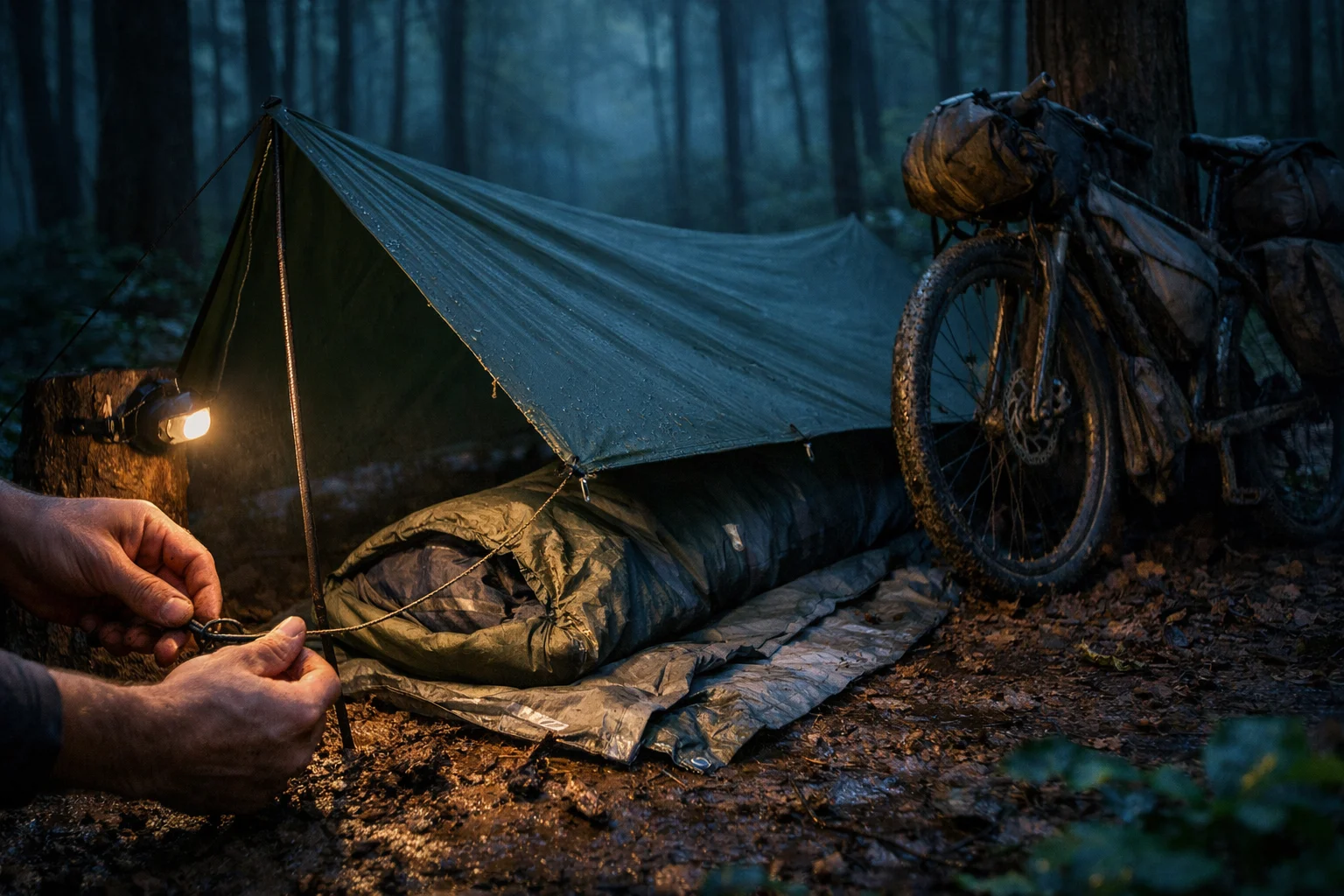
My Real-World Experience with Each Shelter Type
Living with Tents: The Comfort King
After a lot of long days, tents earned my respect for one reason: they make recovery easier. The value is simple—space to sit up, sort gear, and get out of the bug fight when you’re running on fumes.
Takeaway: Tents are the easiest recovery tool (bugs + storms), but they demand smarter packing (split poles/fabric) and a decent footprint.
Bivy Life: The Minimalist’s Dream and Nightmare
If you’re debating tent vs bivy bikepacking, this is the trade: bivies feel amazing when conditions are friendly—and feel brutal when humidity and bugs show up uninvited. That’s why I treat condensation management as a skill, not a footnote.
The honest trade: Bivies rule for tiny/fast camps in drier or fair-to-mixed conditions, but humidity + bugs are the deal-breakers for most people.
Tarp Mastery: The Skill-Dependent Sweet Spot
Once you’ve practiced one reliable pitch, tarps can become the best “coverage-per-ounce” option—especially in warm weather where airflow matters. The trade is simple: tarps reward good site choice and clean tension, and punish sloppy setups.
If you want tarps to feel easy: Tarps feel amazing for ventilation, but only if you’ve practiced one reliable pitch before the trip.
My Top Picks for Each Shelter Type: Best-for-Most vs Budget
These picks are here to save you research time. Think of them as “safe starting points,” not a mandatory shopping list.
How I’m judging “better” here: more forgiving in bugs + weather, faster when you’re tired, and more consistent sleep with less camp-fuss.
Quick picks at a glance (so you can decide fast)
If you’re already leaning one way, these are “safe defaults” that match the three most common bikepacking styles.
| Use case | Pick | Why it fits | Where to go |
|---|---|---|---|
| Most forgiving (bugs + storms) | Big Agnes Copper Spur HV UL | Easy mode setup + consistent sleep. | See the tent pick ↓ |
| Smallest/fastest camp | Outdoor Research Helium Bivy | Tiny packed size (manage humidity). | See the bivy pick ↓ |
| Ventilation + versatility | AquaQuest Guide Tarp | Modular coverage per ounce. | See the tarp pick ↓ |
Tent Recommendations for Bikepacking
Best for most bikepackers (best overall value): Big Agnes Copper Spur HV UL ($399+)
Why it’s a reliable default: this is the “easy mode” tent choice for real trips—reliable bug protection, predictable storm coverage, and enough space to feel human when you’re tired and just want sleep.
Bikepacking note: it packs best when you split it up (poles separate, body/fly separate) so the load rides steadier in your bags.
- Great if your trips look like this: mixed weather, long days, and you want low camp-fuss
- Tradeoff to be honest about: premium cost + lighter fabrics mean basic site care matters (clear sharp stuff first, don’t drag it)
Skip it if: you don’t want to baby lighter fabrics, or you’re strictly trying to keep cost down.
Reliable “best-for-most” tent: Copper Spur HV UL — calm setup, strong bug protection, and predictable coverage when the weather turns.
Budget / starter pick: ALPS Mountaineering Lynx 1 ($110–$170)
Why it’s a solid starter: it gives you “real tent” basics—full bug protection and straightforward setup—at a price that doesn’t sting while you learn what you actually care about (space, weight, or storm confidence).
- Great if your trips look like this: first-time bikepacking, shorter trips, and you want low setup stress
- Tradeoff: heavier and bulkier in bags than premium options (great value, not for ounce-counting)
Skip it if: you’re tight on bag space or trying to keep bulk as low as possible.
Product: ALPS Mountaineering Lynx 1 — a simple, no-drama starter tent when you want full bug protection without overthinking it.
Bivy Recommendation for Bikepacking
Quick reality check: bivies are amazing for tiny/fast camps in fair-to-mixed conditions. In humid climates, condensation is the thing that breaks most people.
Best “bivy-curious” pick: Outdoor Research Helium Bivy ($146–$225)
Why it’s a reliable default: it fits the fast & light vibe—compact, quick camp, and simple nights (sleep, wake, go). It’s a good way to try bivy life without pretending condensation doesn’t exist.
- Great if your trips look like this: arrive late / leave early, smaller campsites, and you’re OK with minimal living space
- Tradeoff: condensation is the classic downside; also less fun for long storms where you’re stuck inside
Skip it if: most of your routes are humid/coastal and you hate managing condensation.
Fast & light bivy: Outdoor Research Helium Bivy — tiny packed size for simple nights (just be honest about humidity).
Tarp Recommendations for Bikepacking
Best for most tarp users (best overall value): AquaQuest Guide Tarp (from ~$99)
Why it’s a reliable default: light enough for bikepacking, good ventilation, and built for real rain. The 5,000 mm waterproof rating plus seam-taped seams is a strong combo for back-to-back wet nights (in plain English: it’s built for sustained rain when pitched tight and set up well).
- Great if your trips look like this: warm-to-mixed weather, variable campsites, and you want a modular setup (tarp + bug plan)
- Tradeoff: tarps reward good site choice—bad sites feel worse under tarps than under tents
Skip it if: you don’t want to practice pitching, or you need instant built-in bug protection.
Low-fuss tarp starting point: AquaQuest Guide — light, seam-taped, and easy to pitch tight when weather moves in.
Minimum tarp kit (so you don’t get surprised)
Minimum tarp kit: tarp + 6–8 stakes + guyline + a seasonal bug plan + a simple groundsheet.
Helpful tools for tarp + bivy nights (the “system” pieces)
If you want tarp (or bivy) nights to feel calm instead of fiddly, treat the setup like a small system. These are the pieces that prevent most “I regret this” nights.
- Bug inner / net tent / bug bivy: the easiest way to make warm, buggy nights feel effortless under a tarp.
- 2–4 stronger stakes: the confidence boosters for wind, hard ground, and imperfect soil.
- Guyline + tensioners: makes pitches faster and keeps fabric from flapping when the wind shifts at 2 a.m.
- Simple groundsheet (polycryo/Tyvek): cuts splash and ground moisture so you don’t wake up clammy.
Optional: A simple bug-proof option that still keeps the tarp vibe: Outdoor Research Bug Bivy.
Size note (so you don’t overbuy)
For most solo bikepackers, a 10 × 7 ft tarp is the sweet spot: enough coverage without a huge weight/bulk jump. Go bigger (10 × 10) if you’re tall, camp in driving rain often, or want more cooking/gear coverage.
Note: If you can’t find this exact tarp easily, keep the criteria the same: simple rectangular shape, reinforced tie-outs, and enough coverage for your height (then pair it with a bug plan when needed).
Cost reality check: A tarp setup can look “cheap” until you add stakes, cord, and a bug plan. Bivies can creep up too if you end up pairing them with a small tarp for rain. Budget the whole shelter system, not just the main piece.
Essential Setup and Teardown Tips for Bikepacking Shelters
This is the unsexy part that saves trips. A shelter can be “great” on paper and still annoy you nightly if your process is slow or fussy.
Tent Setup Efficiency
Practice until you can pitch fast and calm. The difference between 3 minutes and 10 minutes feels huge when weather is moving in.
- Pre-attach guy lines so you’re not fumbling with tiny hardware
- Level your sleeping spot first, then build around it
Bivy Best Practices
Condensation management makes or breaks bivy experiences. Small habits make a big difference:
- Crack ventilation even when it’s cold
- Avoid breathing deep into the bivy if you can
- Choose slightly elevated spots to reduce ground moisture
Tarp setup bikepacking fundamentals
If you want tarps to feel “easy,” you have to make one pitch automatic. That’s the whole game.
- Master an A-frame first (simple, reliable, weather-resistant)
- Carry extra guy line for odd anchor spacing
- Learn two knots you can tie in the dark (trucker’s hitch + bowline)
Optional upgrades that prevent shelter failures
These aren’t required—but they fix the most common “trip-ruiners” (leaks, tears, weak stakes, buggy nights).
Two quick non-product upgrades I almost always recommend:
- 2–4 stronger stakes: keep a few “real” stakes for wind or hard ground, and run lighter ones for the rest.
- Extra guyline: solves weird anchor spacing and sloppy pitches fast.
This is the classic 2 a.m. failure: a gust hits, a weak stake pulls, and your pitch collapses when you’re too tired to troubleshoot. The fix is simple: carry a small “anchor core” (2–4 stakes you trust), then use lighter stakes for the rest of your tie-outs.
Reliable “anchor core” for wind/hard ground: MSR Groundhog stakes (proven hold without much added weight).
Repair tape: the ultimate “save the trip” item
A small roll of tenacious tape can patch most fabric tears or leaks right in the field—turning a potential wet, miserable night into a manageable one. If you’re only doing overnighters close to towns, this is an easy skip.
If you’re riding remote: A small roll of repair tape fixes the most common shelter “oops” moments fast.
Skip it when: If your routes stay close to towns or you’re mostly doing fair-weather overnighters, you can usually skip repair tape and just carry a few stronger stakes + extra cord.
Head net: cheap sleep insurance for buggy nights
When mosquitoes or no-see-ums show up in force, a simple lightweight head net is often the difference between sleeping and swatting all night. If you rarely see bugs where you ride, skip it (or just carry a tiny backup like the one below).
Product: Ultralight bug head net — packs tiny, saves sleep when no-see-ums or mosquitoes surprise you.
Advanced Considerations for Shelter Selection
Climate-Specific Recommendations
Match the shelter to your local reality, not internet hype.
- Desert / arid: bivies and tarps shine (lower humidity); plan a groundsheet and wind strategy
- Humid / coastal: prioritize bug protection + ventilation; sealed shelters tend to feel worse here
- Mountain / alpine: weather confidence usually beats ounce-counting when winds pick up fast
Frequently Asked Questions
Conclusion: Matching your shelter choice to your style
In the end, the best bikepacking shelter comes down to honest self-assessment: what actually breaks your sleep — bugs, weather stress, or feeling cramped?
Rule of thumb: choose a tent for the easiest, most forgiving nights. Pick a bivy for the smallest and fastest camps when you can manage humidity and insects. Go tarp for maximum ventilation and flexibility — as long as you practice your pitch.
Ready to dial in the rest of your kit? Use the complete bikepacking gear guide for the full system approach.
Two-line plan: Write your default shelter for local conditions, then write your bad-weather backup. That simple plan prevents most last-minute gear panic.
This guide is general education, not personalized advice for your exact route, weather, or risk tolerance. Conditions and outcomes vary—especially with storms, temperature swings, and local bug pressure. If you’re unsure, talk with a qualified outdoor professional or experienced local riders before committing to a shelter system.